
Iceland - Land of Contrasts
The Golden Circle
After landing in Reykjavik, the capital of Iceland, I plan to cross the island from the South to the East, then head up North before finishing in the West. A large loop of approximately 4,000 km in 15 days.
Land of extremes and contrasts, on the edge of the Arctic Circle and close to Greenland, Iceland offers a rich and protected biodiversity and wild landscapes: volcanoes, glaciers, lava fields, geysers, monumental waterfalls, canyons, black sand beaches... In this month of July, the sun hardly ever sets and the weather is very changeable. It is said that you can experience all four seasons in a single day...
Day 1
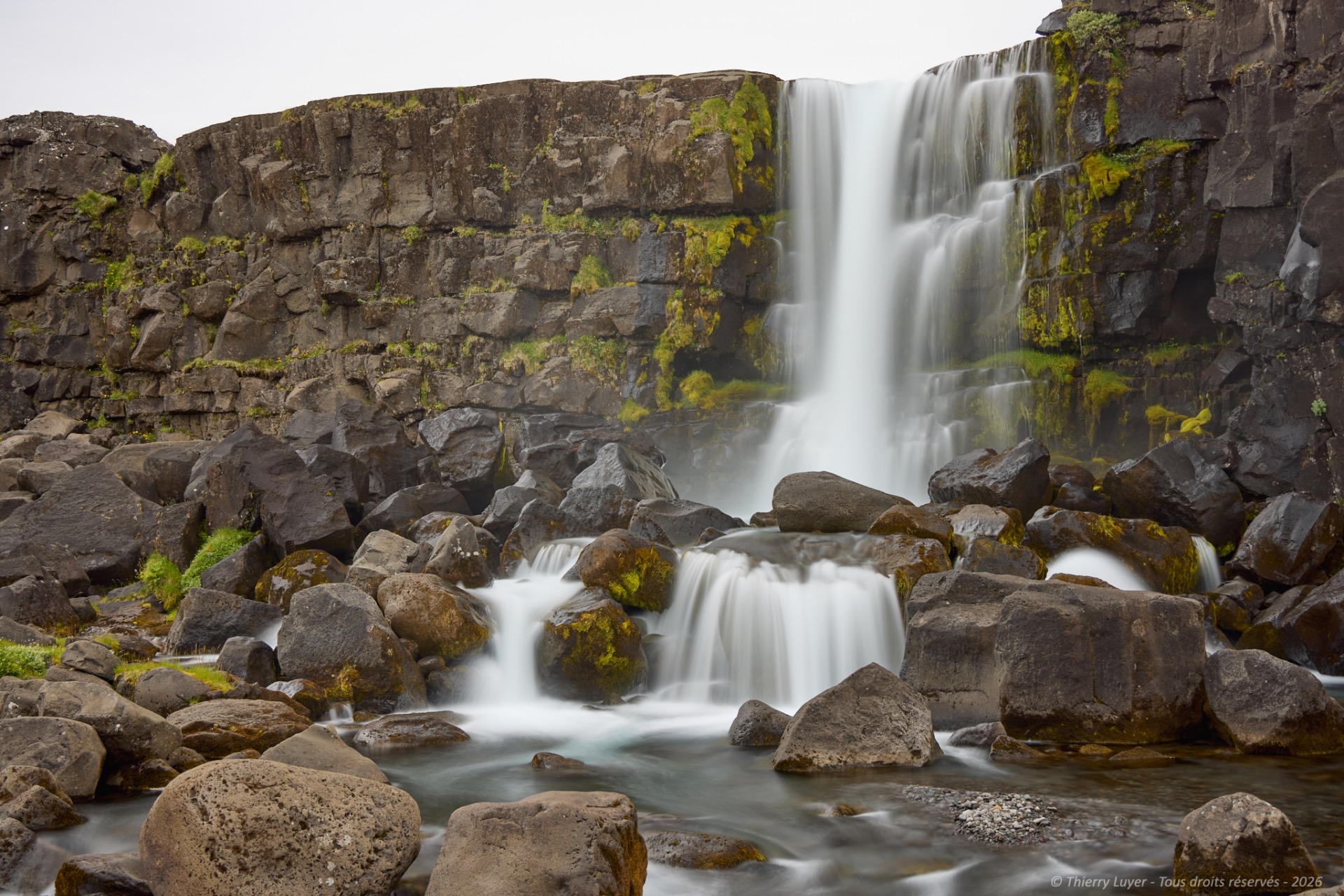
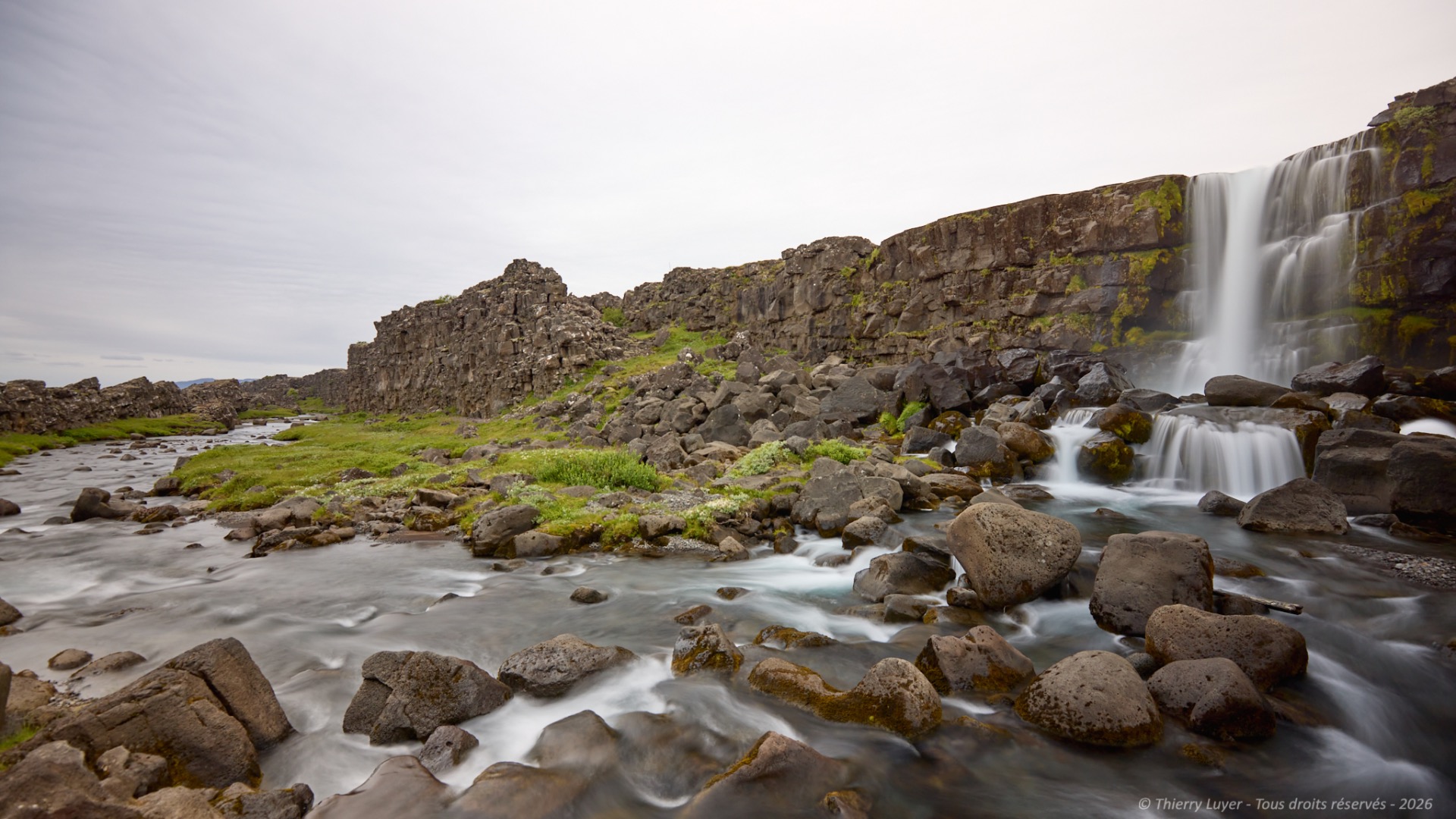
My first destination is Thingvellir National Park and the Öxarárfoss waterfall. The 13-meter-high waterfall flows from the Oxara River and cascades down the cliffs of the Almannagja gorge, which marks the boundary between the North American and Eurasian tectonic plates.
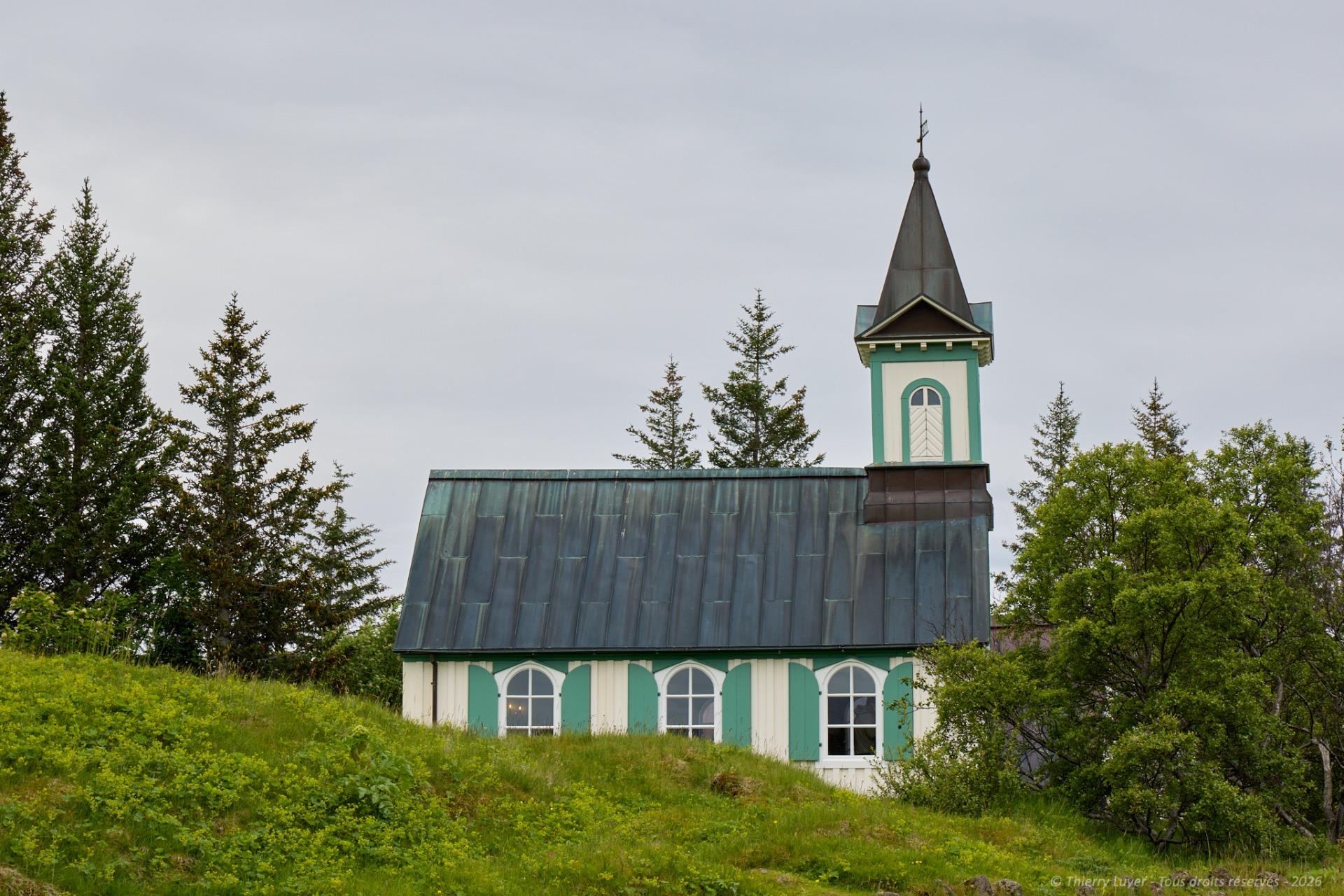
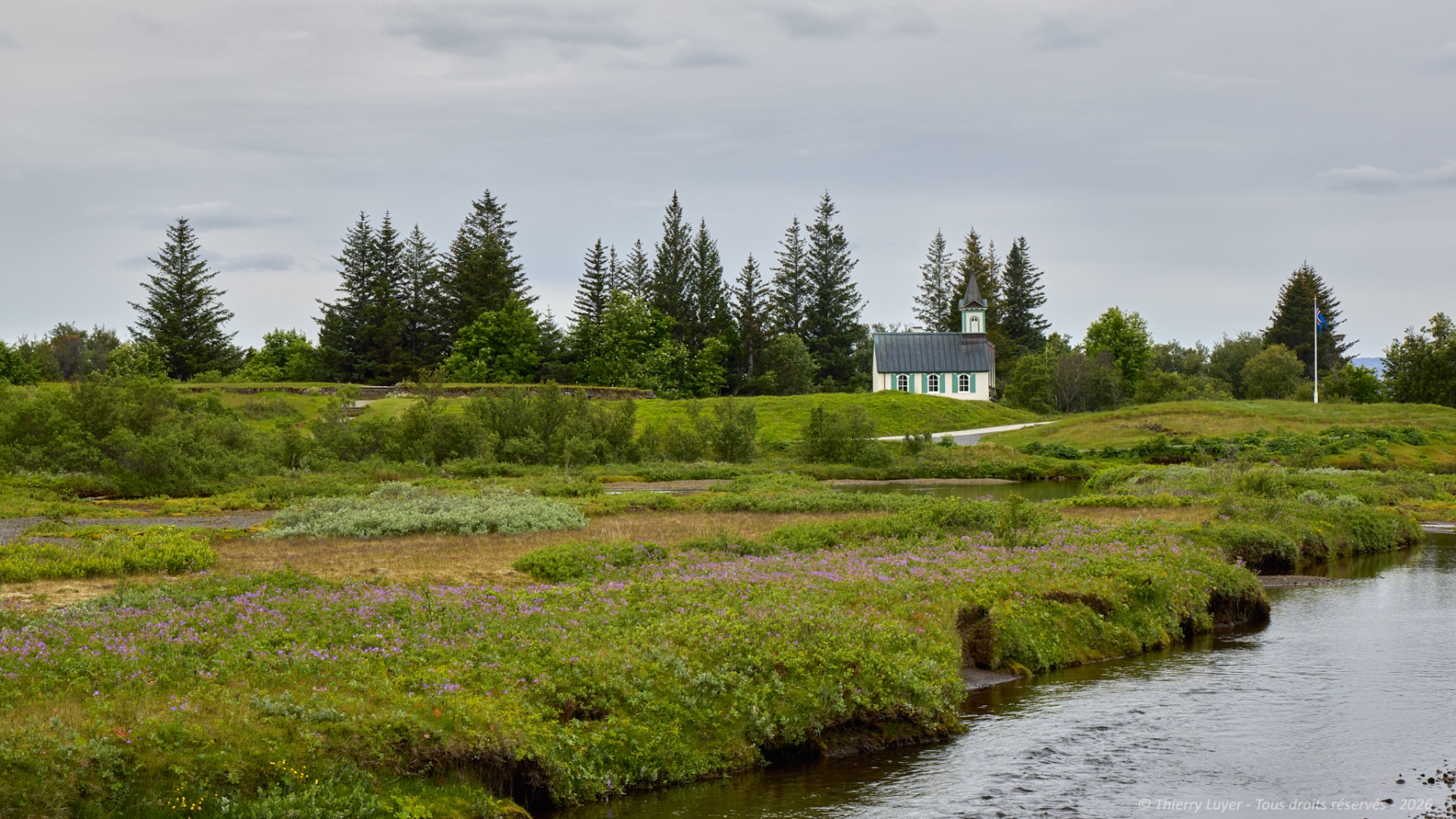
Down below lies a charming little church named « Þingvallakirkja » near the banks of the Oxara River. Built in the 11th century, shortly after Iceland's conversion to Christianity, legend has it that King Olaf II of Norway sent wood for its construction. The current version dates back to 1859.
The contrast is stunning, almost supernatural... the feeling of being on another planet!
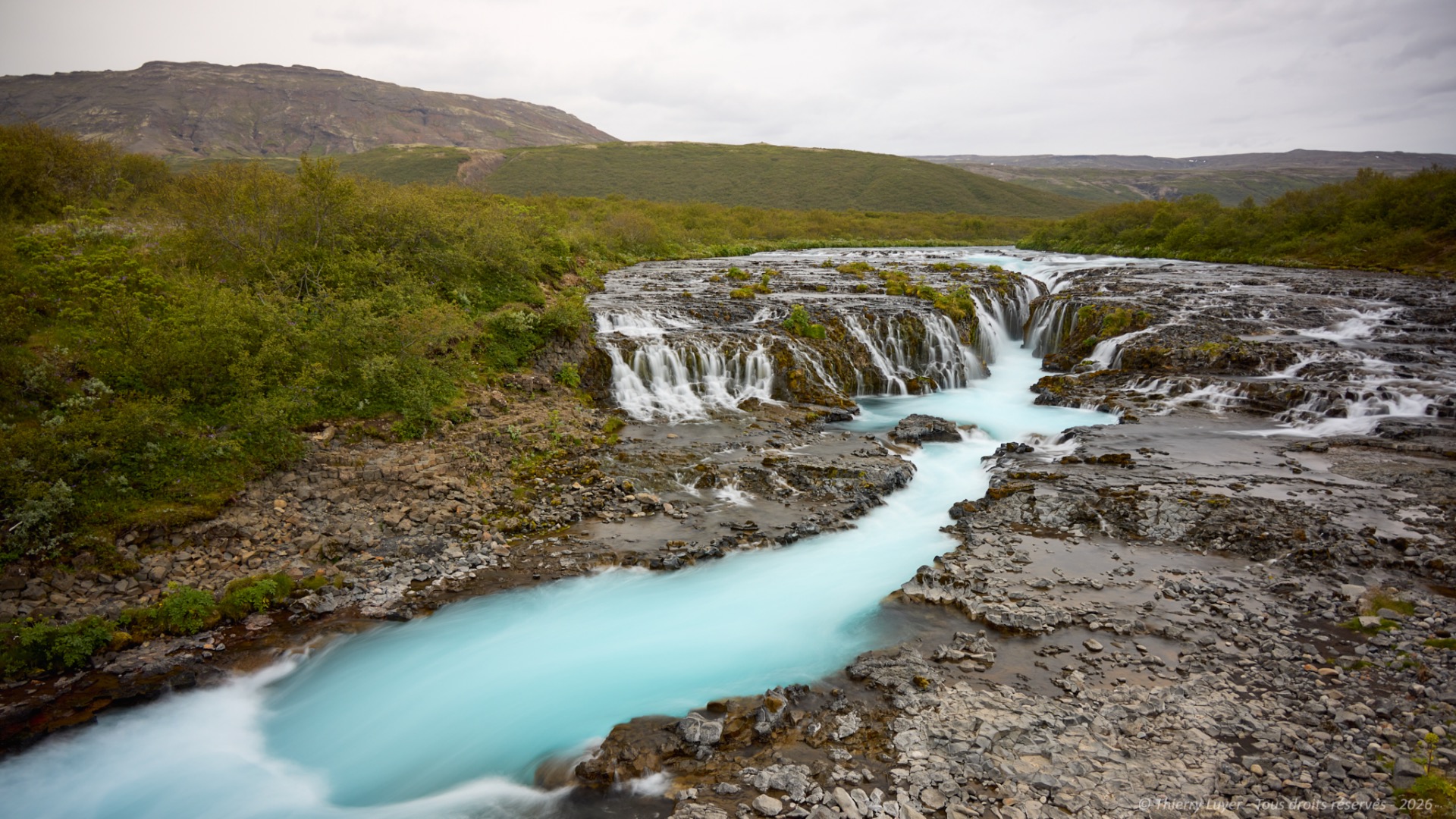
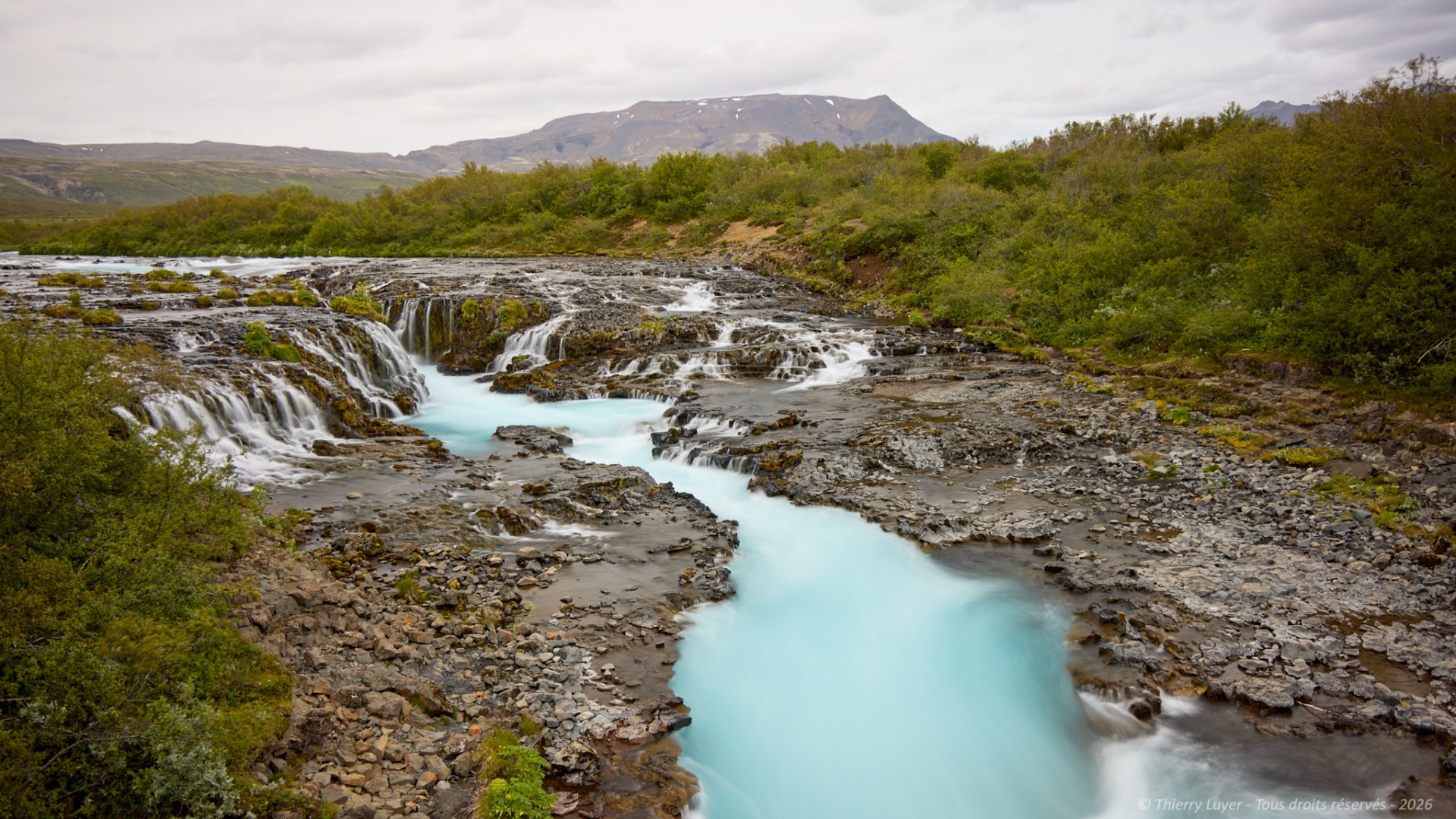
I then head towards Geysir, an ultra-touristy site among the most visited in the country. It is a geothermal field where you can observe geysers. The density of tourists does not allow me to photograph the main geyser which erupts every 5 to 10 minutes to a height of 20 meters. The surrounding nature sets the mood: fumaroles and boiling water holes... Nature is on the move here!
This first day comes to an end after 200 km and nearly 3 hours of driving.
Day 2
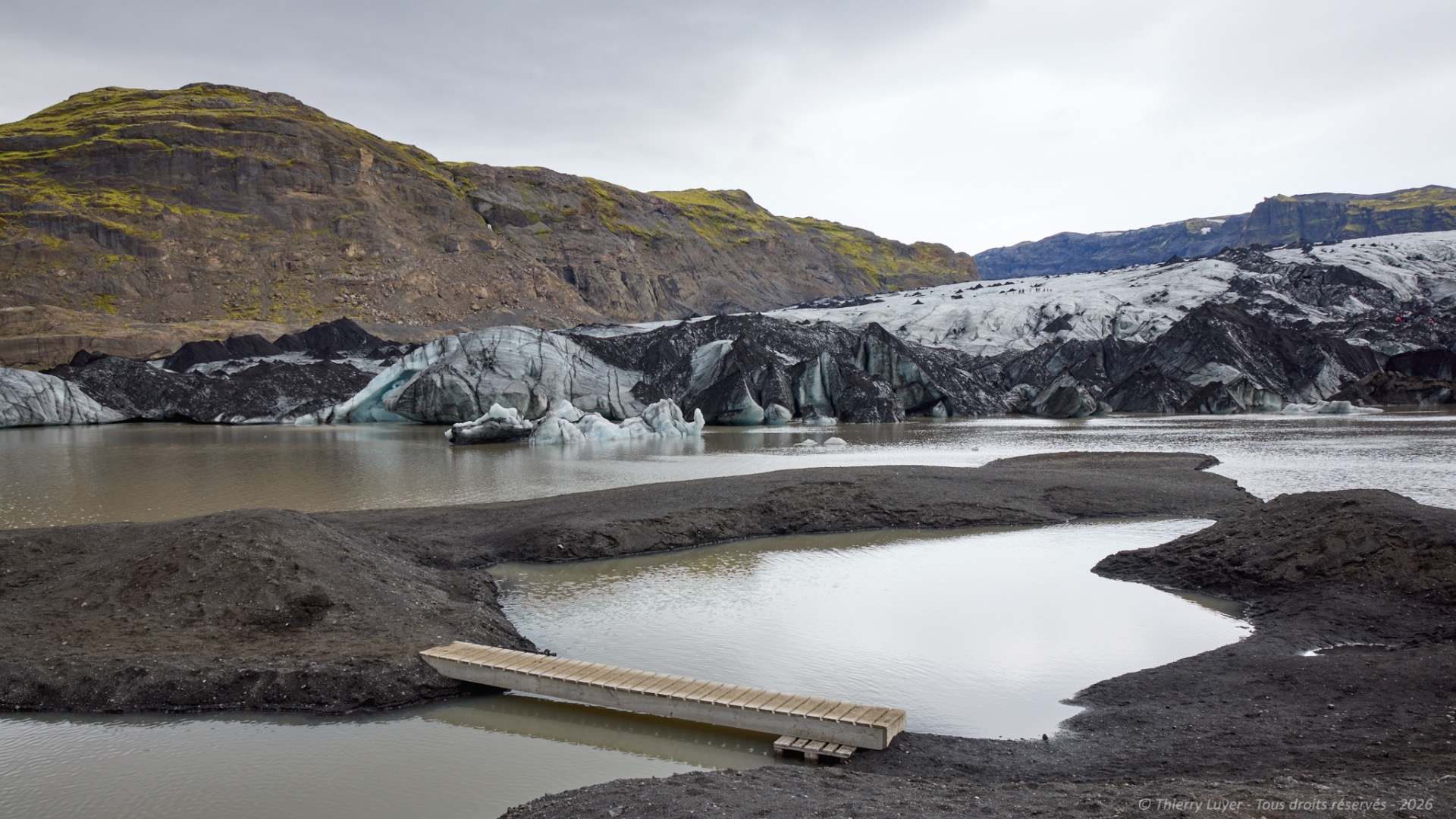
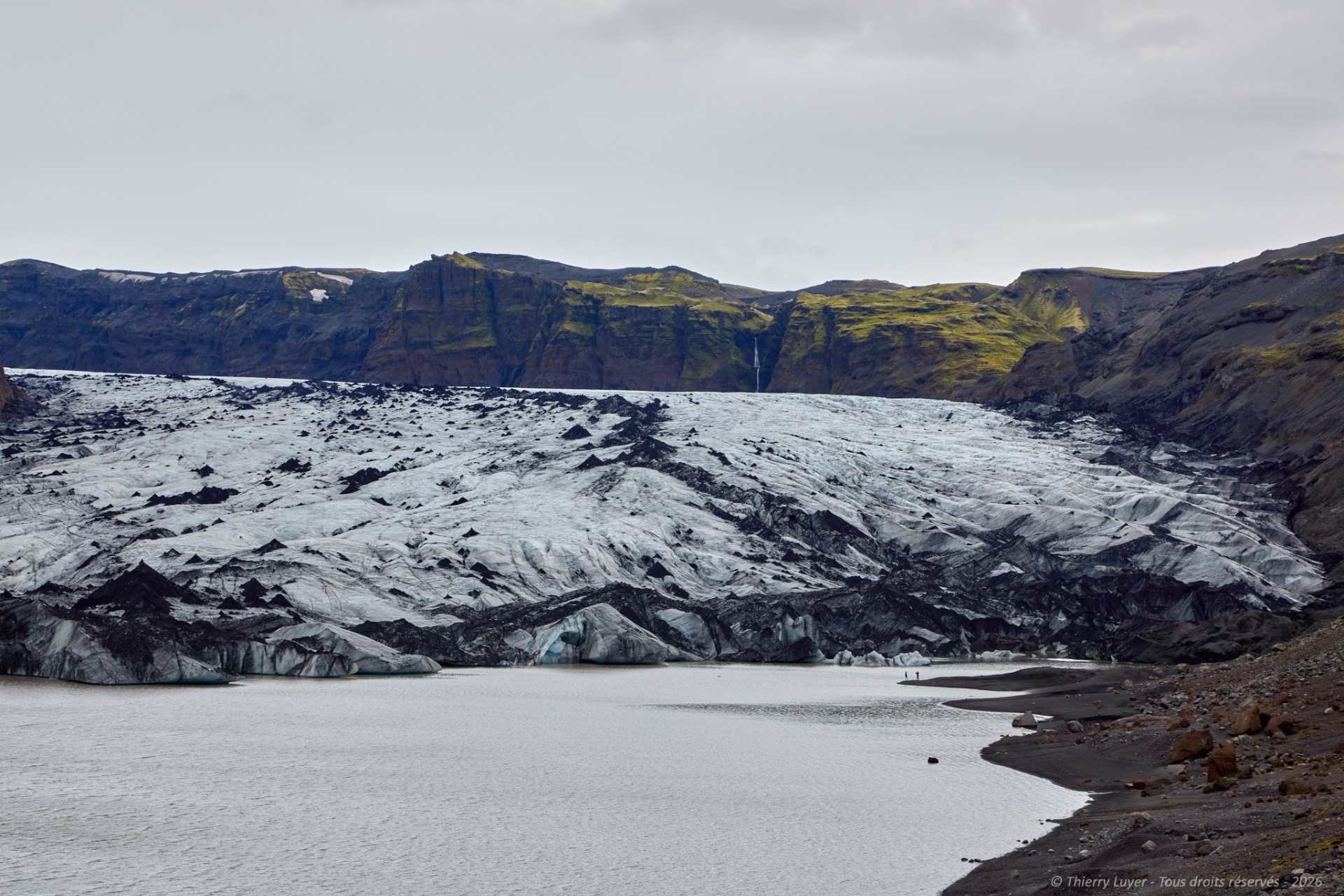
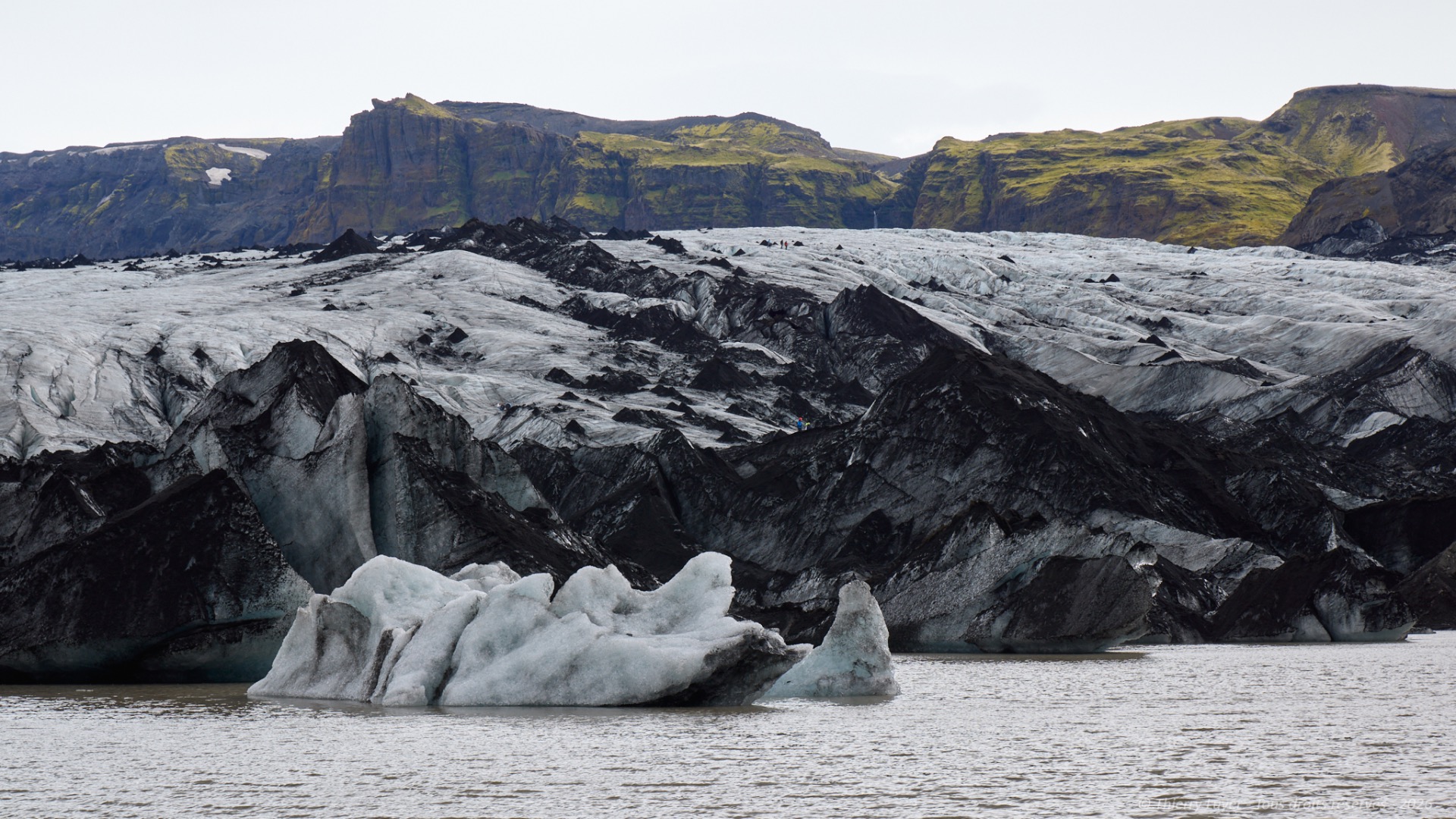
This morning, I am heading towards a giant for a first encounter with the Sólheimajökull glacier, itself an outlet glacier (1) of the Mýrdalsjökull ice cap, on the south coast of Iceland. Mýrdalsjökull is the fourth largest ice cap in the country, covering nearly 600 square kilometers, and its highest peak rises to almost 1,500 meters. It is also known for being situated at the summit of the famous explosive volcano Katla.
Its grayish, or even black appearance in places, comes from the ash fallout of previous volcanic eruptions. The overcast sky further dims the little light there is.
(1) An outlet glacier is a tongue of ice that flows from an ice cap through valleys or mountain gaps.
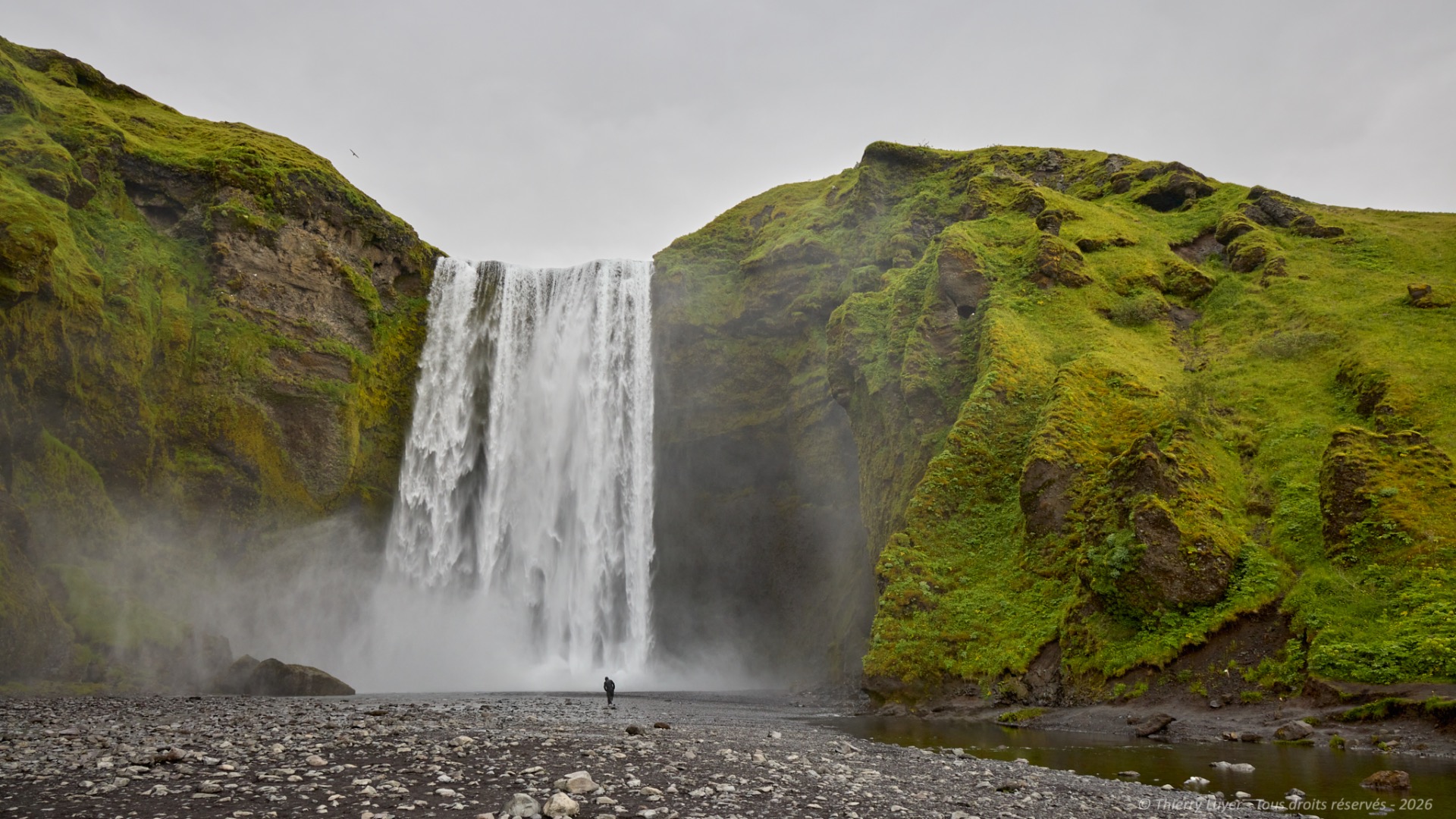
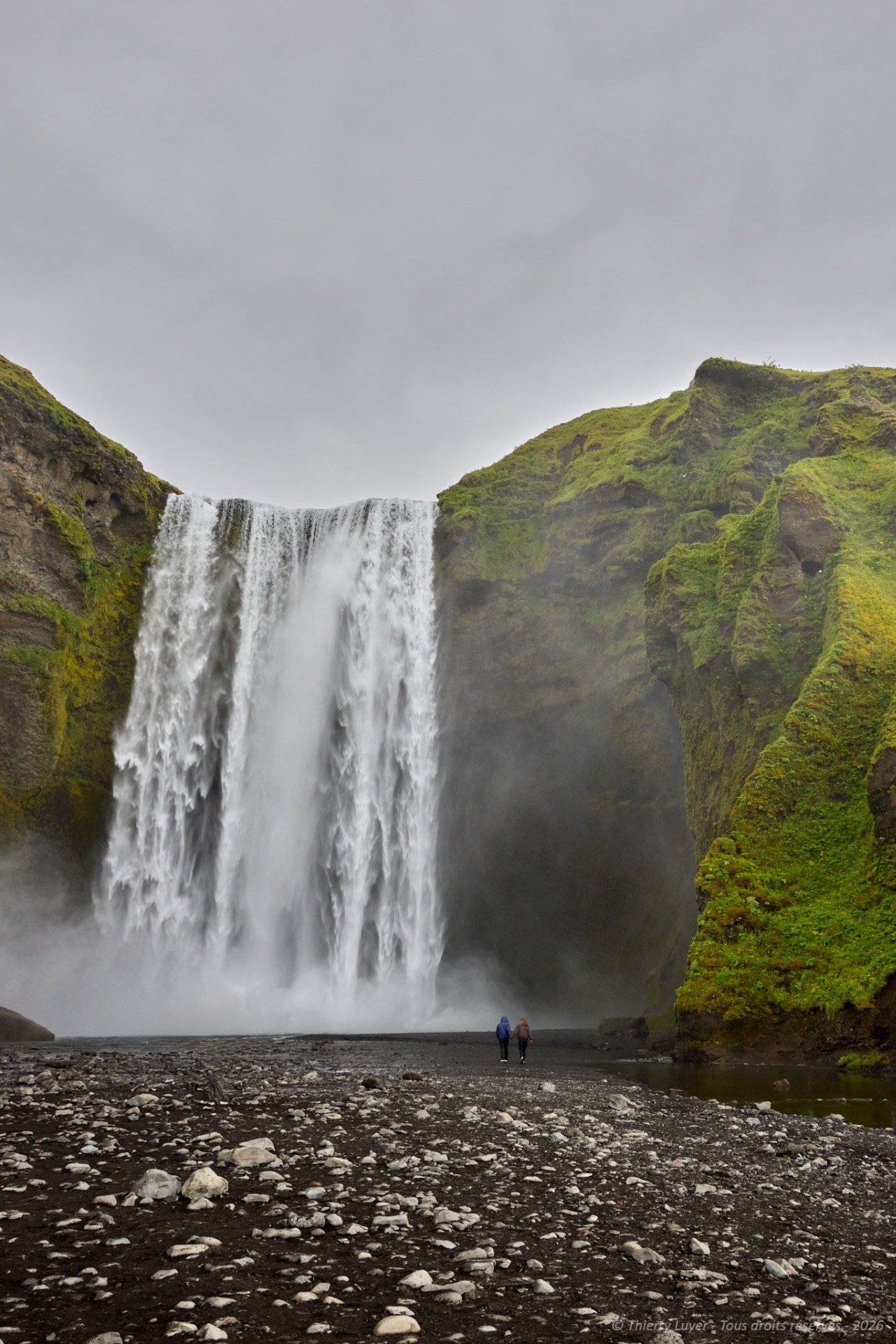
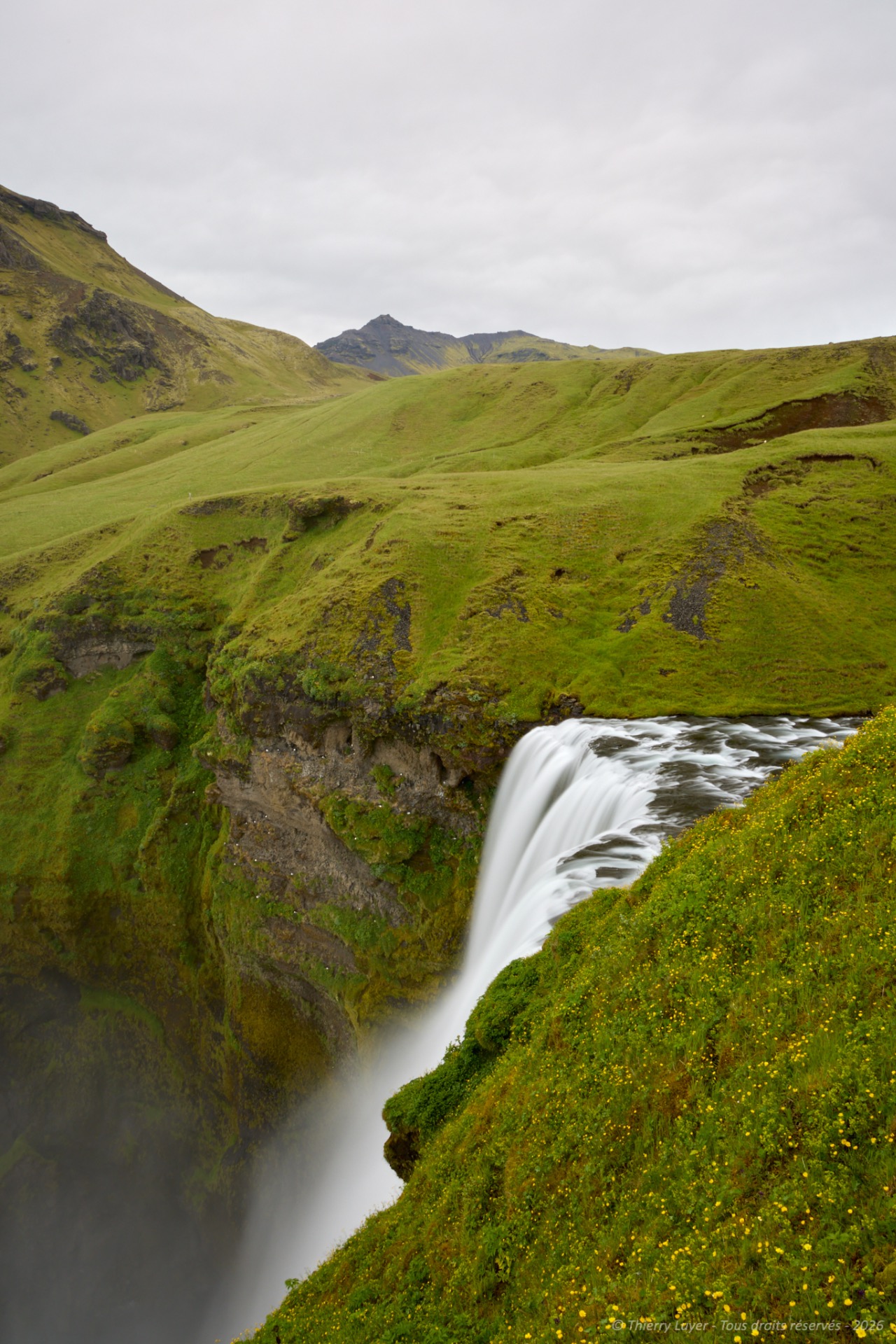
I get back on the road towards the Skógafoss waterfall, where the Skógá river plunges from the cliff from a height of 62 meters over a width of about 25 meters. I will have to find a ford to cross the river in order to position myself, and also deal with the mist spray, water droplets, deafening noise, and the wind generated by the waterfall! The place is majestic.
A fairly steep path to the right of the falls, made up of 527 steps, allows you to climb up and get a view from above.
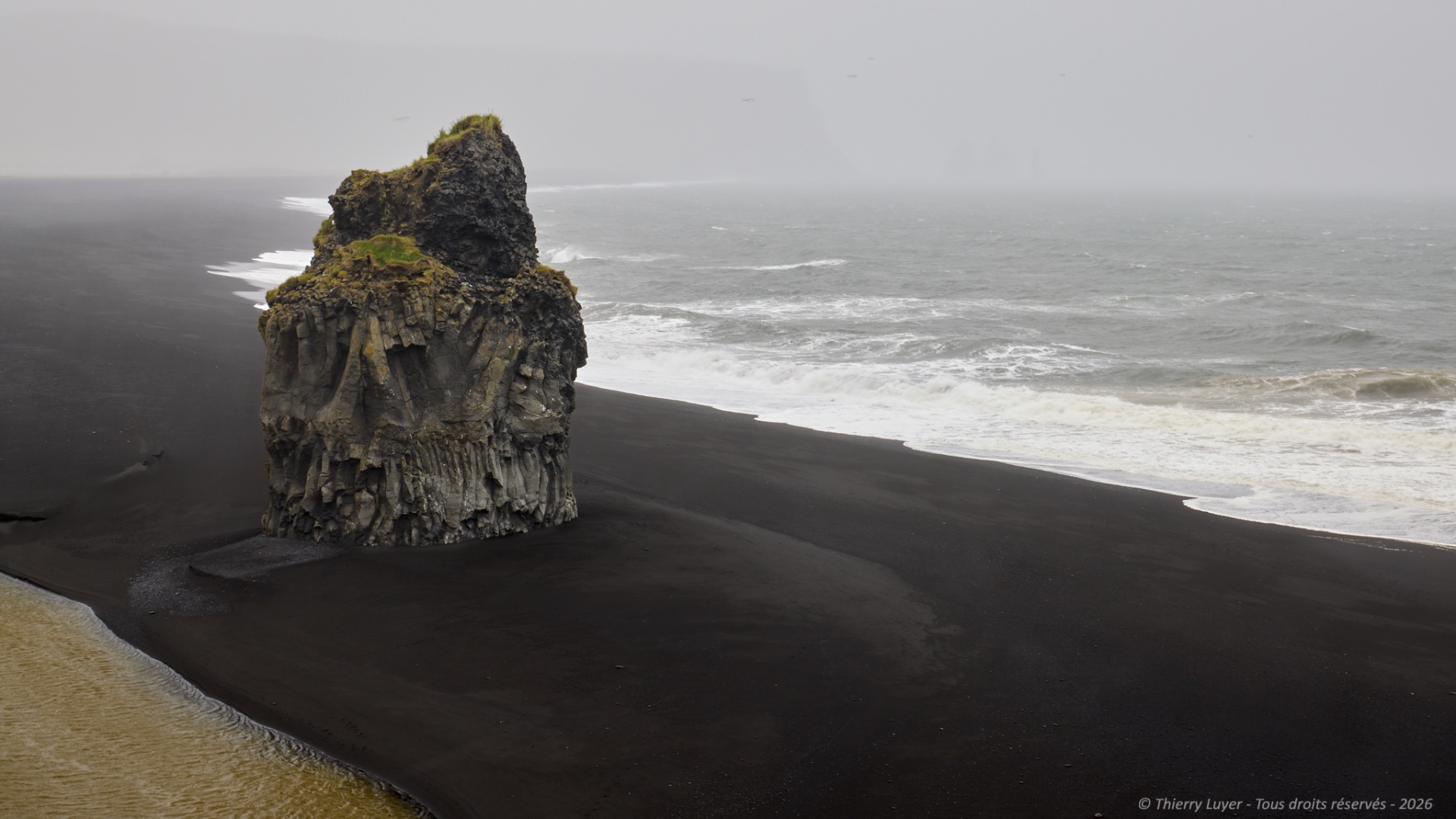
I continue my journey along the coast heading east to reach the site of Dyrhólaey in pouring rain and reduced visibility. The view of the immense black sand beach of Reynisfjara is obscured by the bad weather. Only a gigantic rock emerges in a ghostly atmosphere.
I won't see the basalt columns or the emblematic Reynisdrangar of this site, lava needles rising out of the water that can just be made out in the distance through the mist.
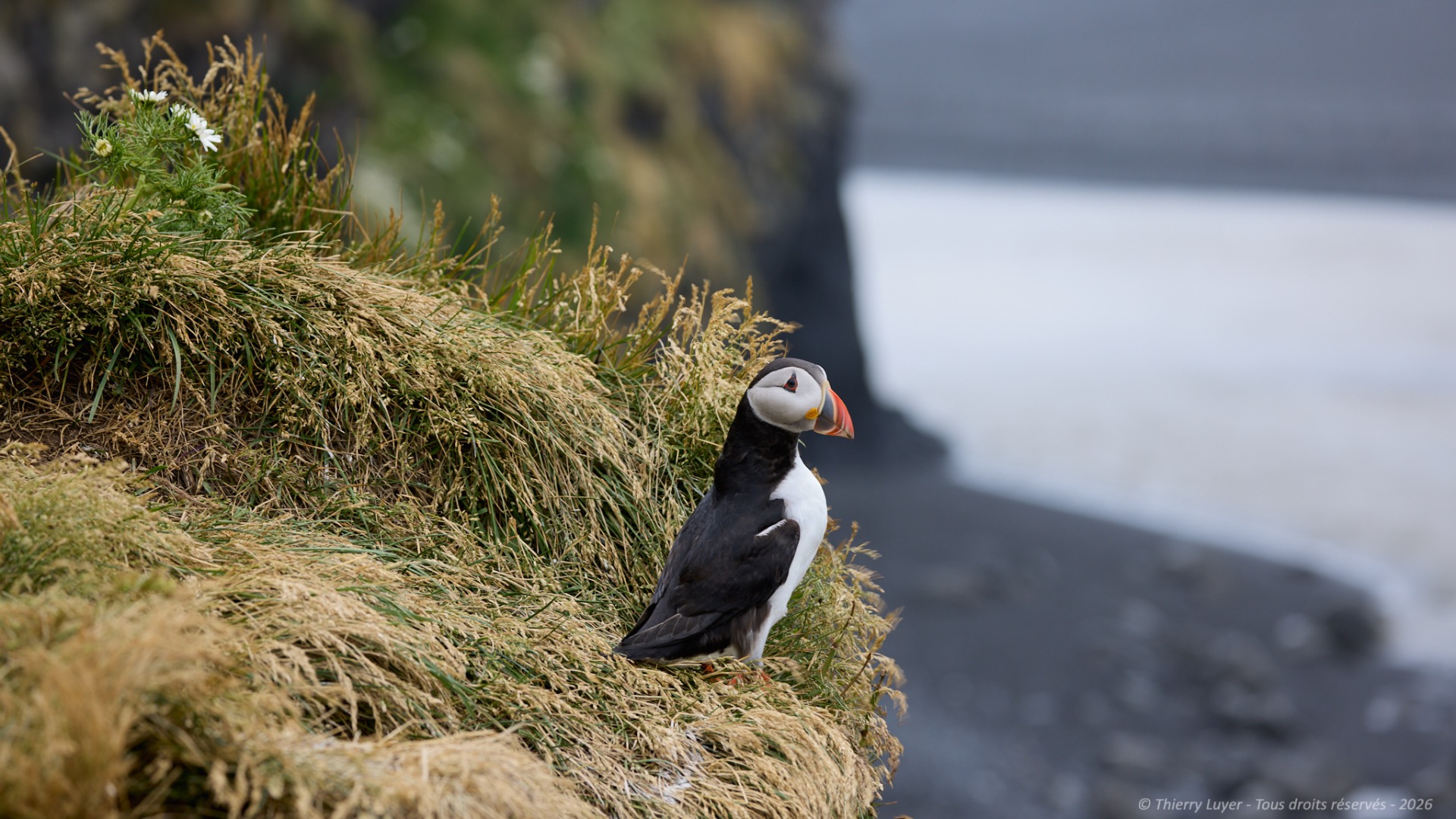
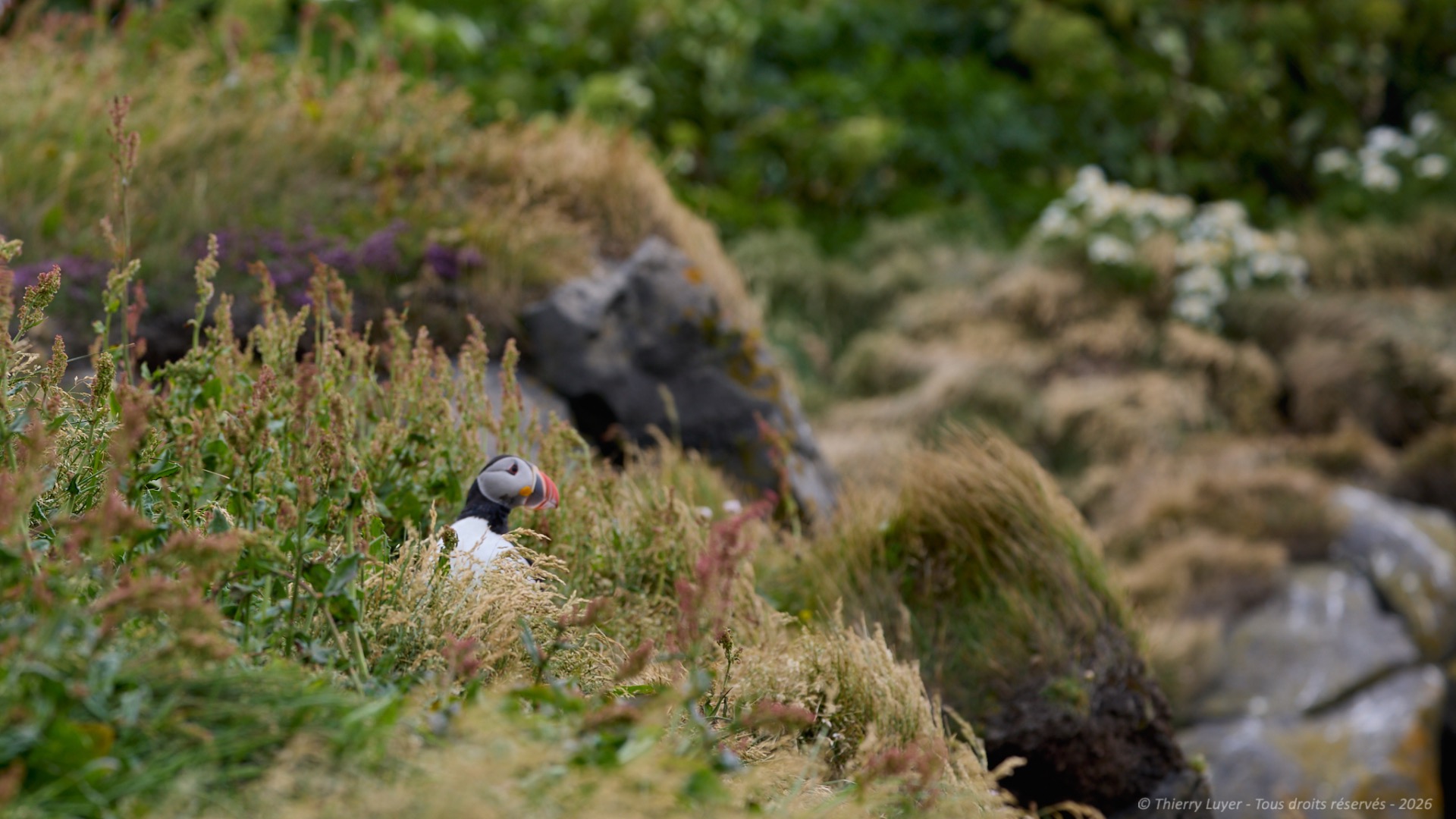
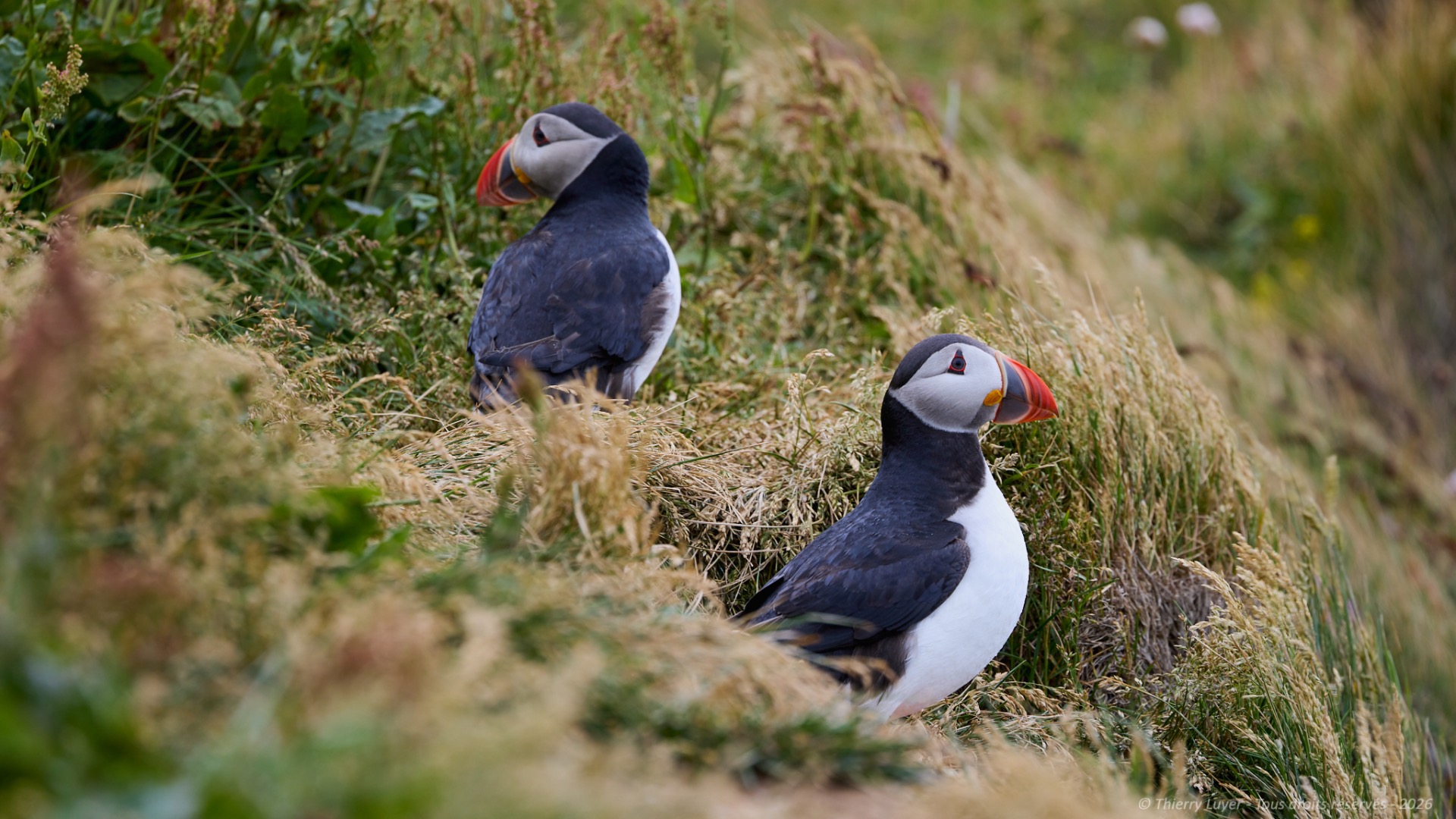
Despite the bad weather and the fierce winds sweeping the cliffs, I still manage to get a few shots of puffins nesting in the cliffs. Always a magical encounter!
This second day comes to an end after 300 km and nearly 4 and a half hours of driving.

Day 3
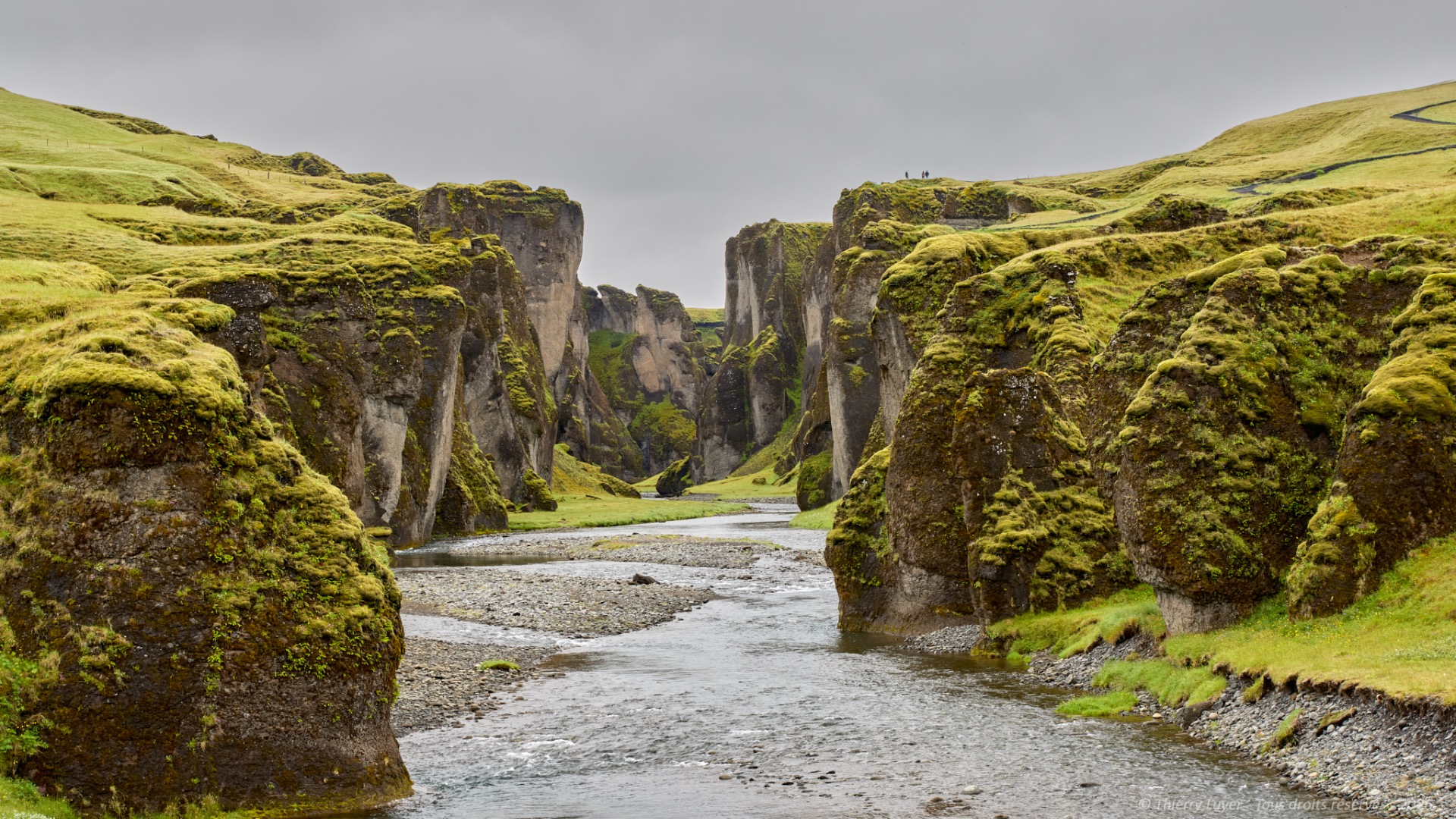
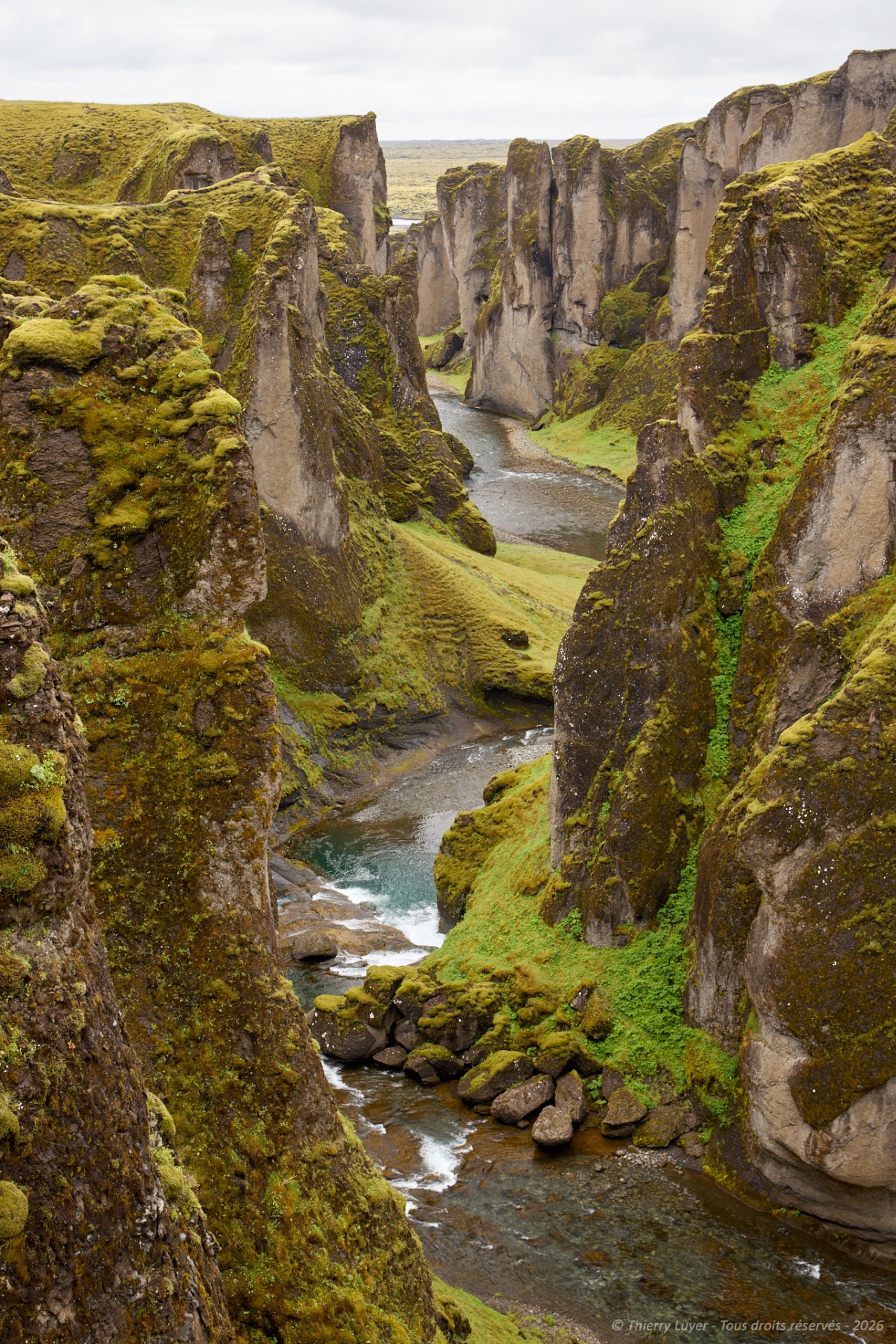
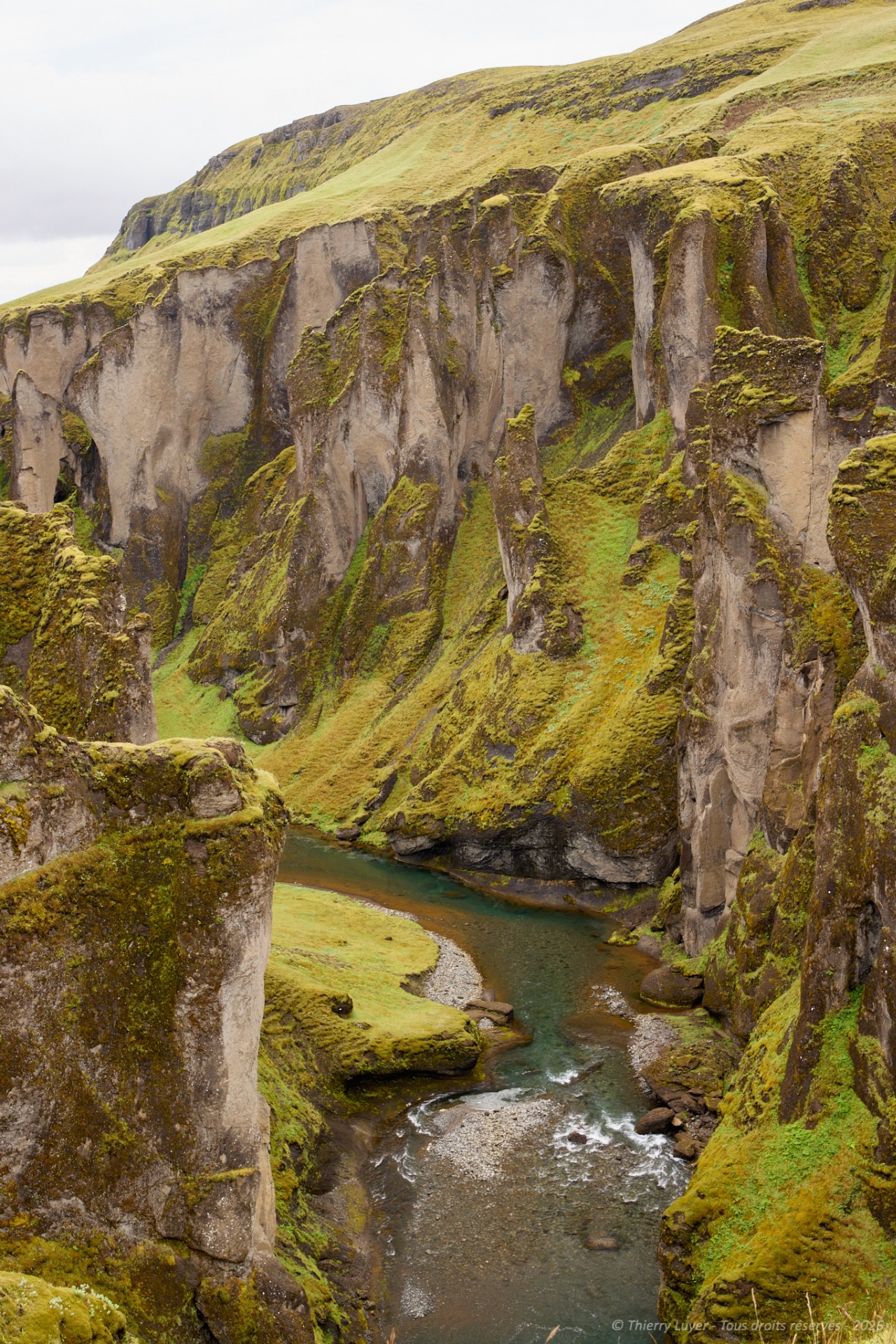
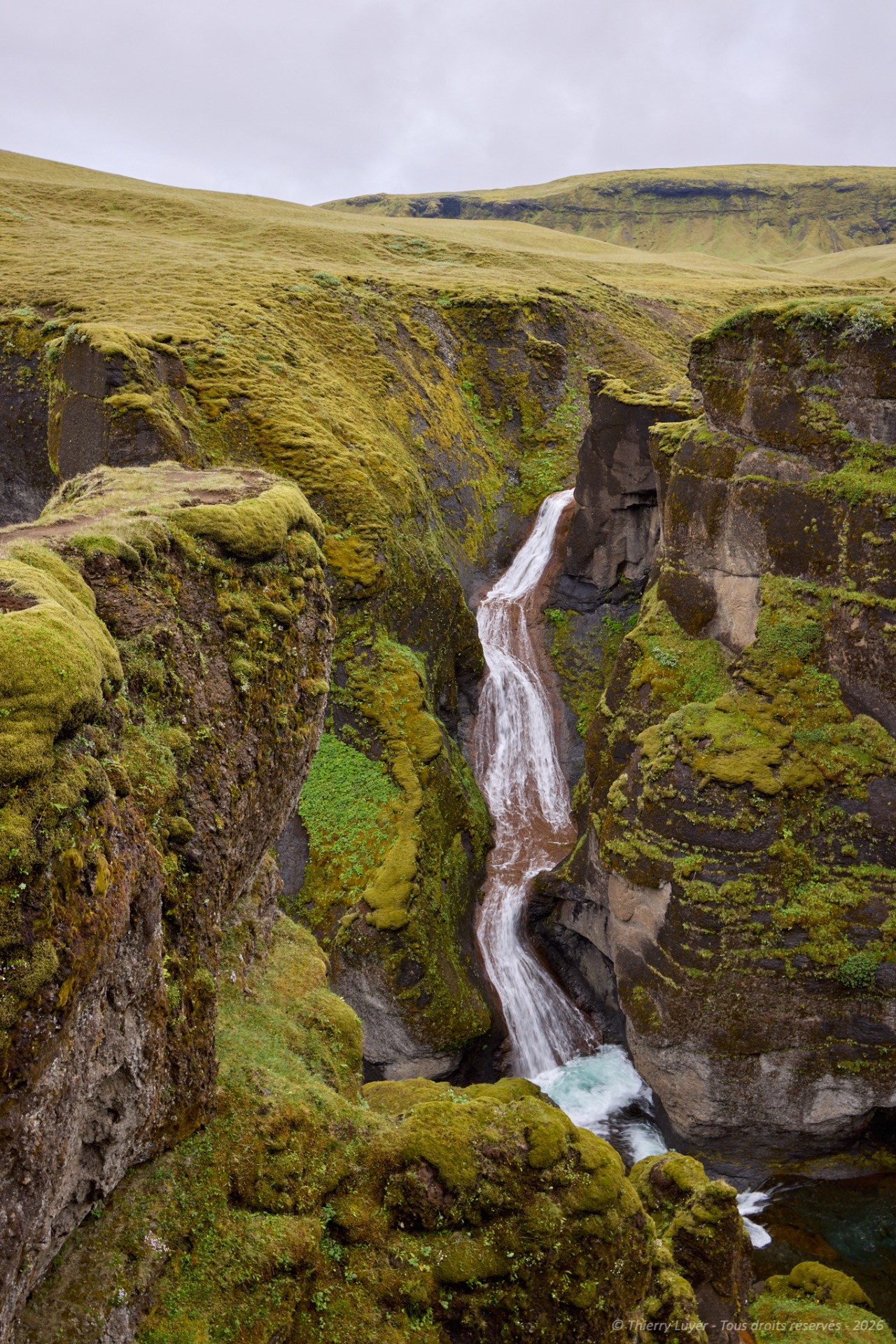
This morning I'm leaving to discover the Fjaðrárgljúfur canyon. 1,300 meters long and nearly 100 meters high, this canyon commands respect.
About 9,000 years ago, retreating glaciers formed a huge lake upstream from this location. A stream at the edge of this lake slowly carved away the softer sedimentary rocks until it reached the harder layers that do not erode, forming this canyon.
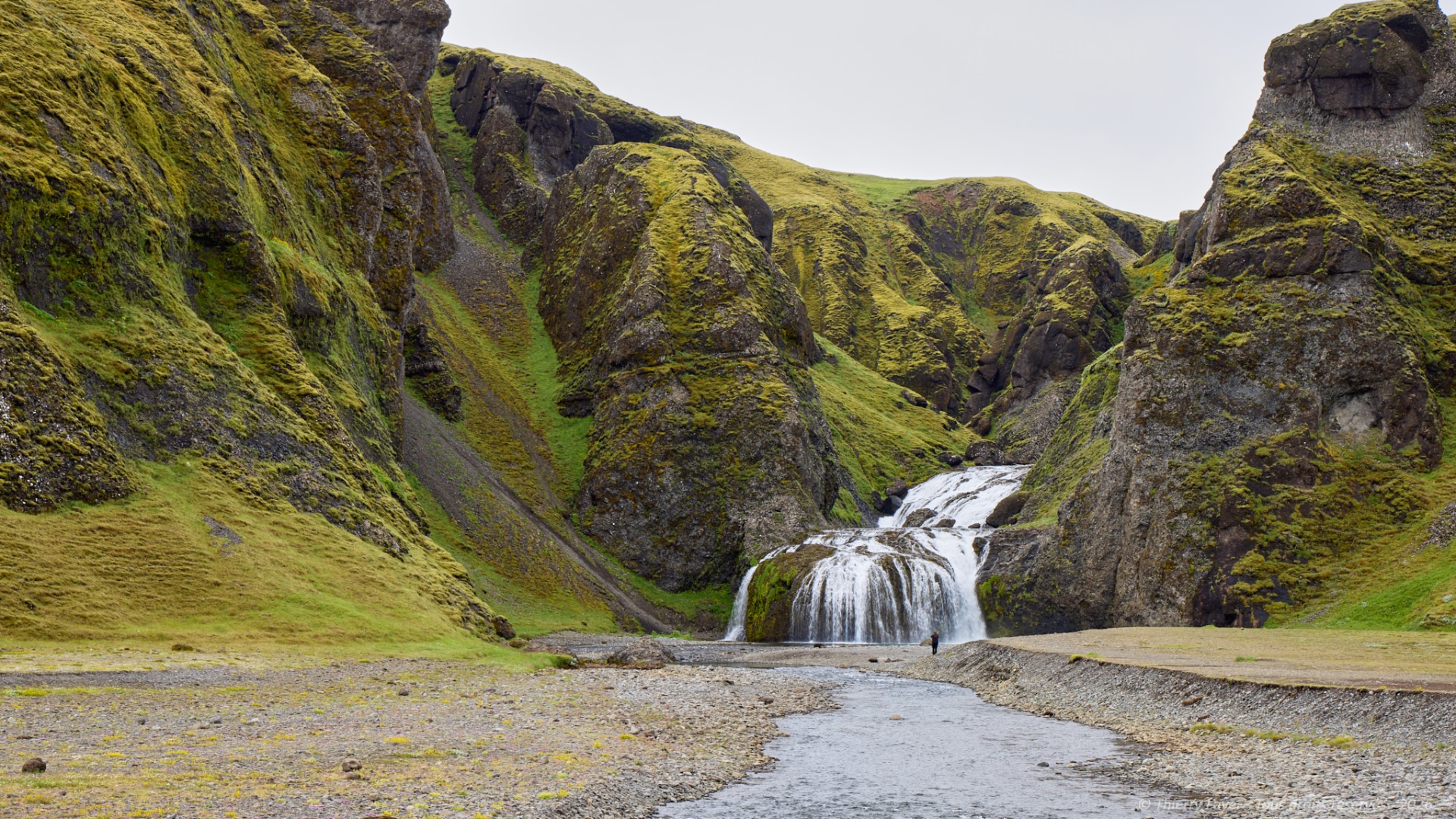
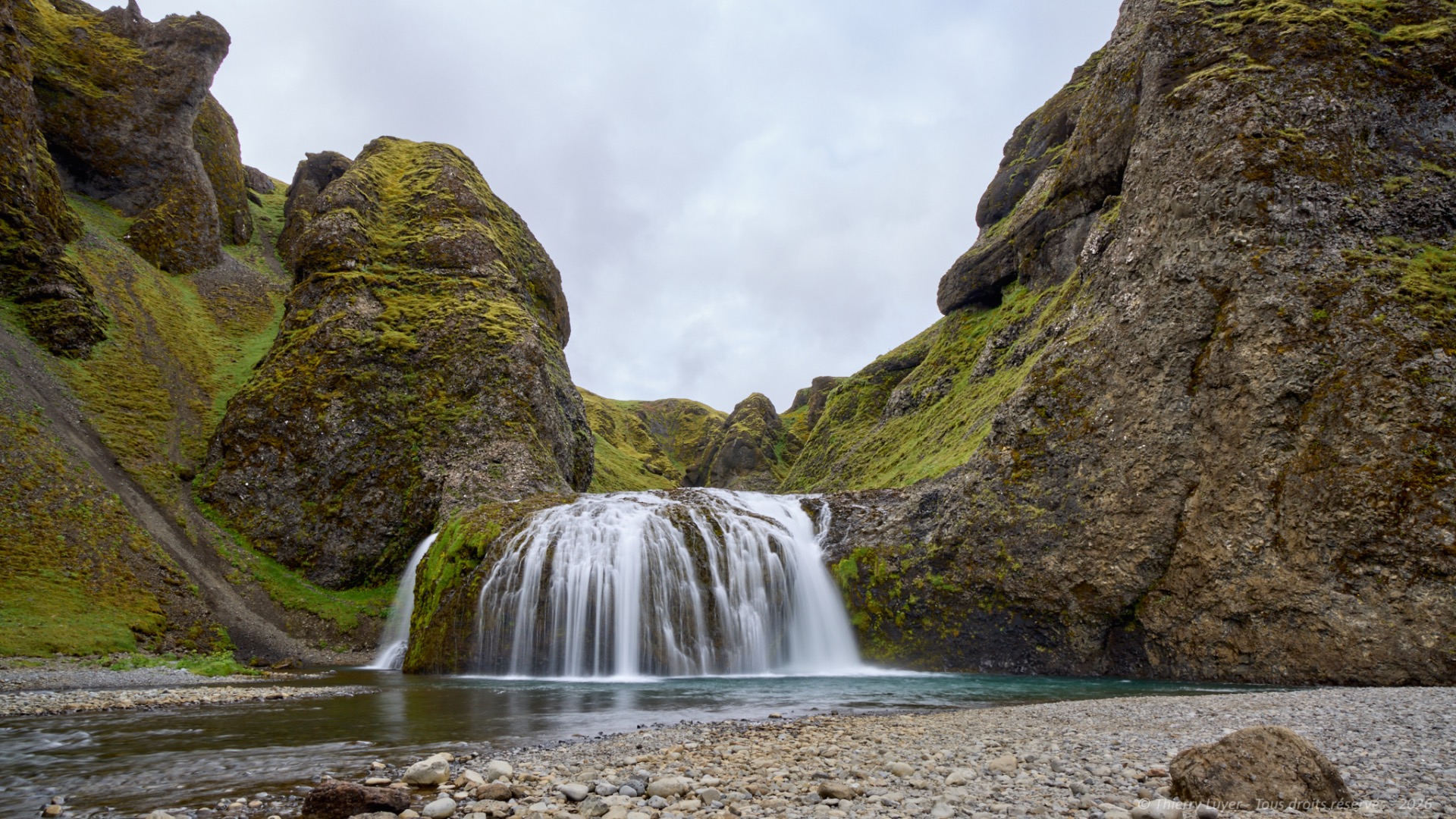
I continue my journey along the coast heading east to reach Stjórnarfoss, a waterfall off the beaten path. Surrounded by basalt rocks and emerald moss, the Stjórn river cascades down a dome-shaped cliff.
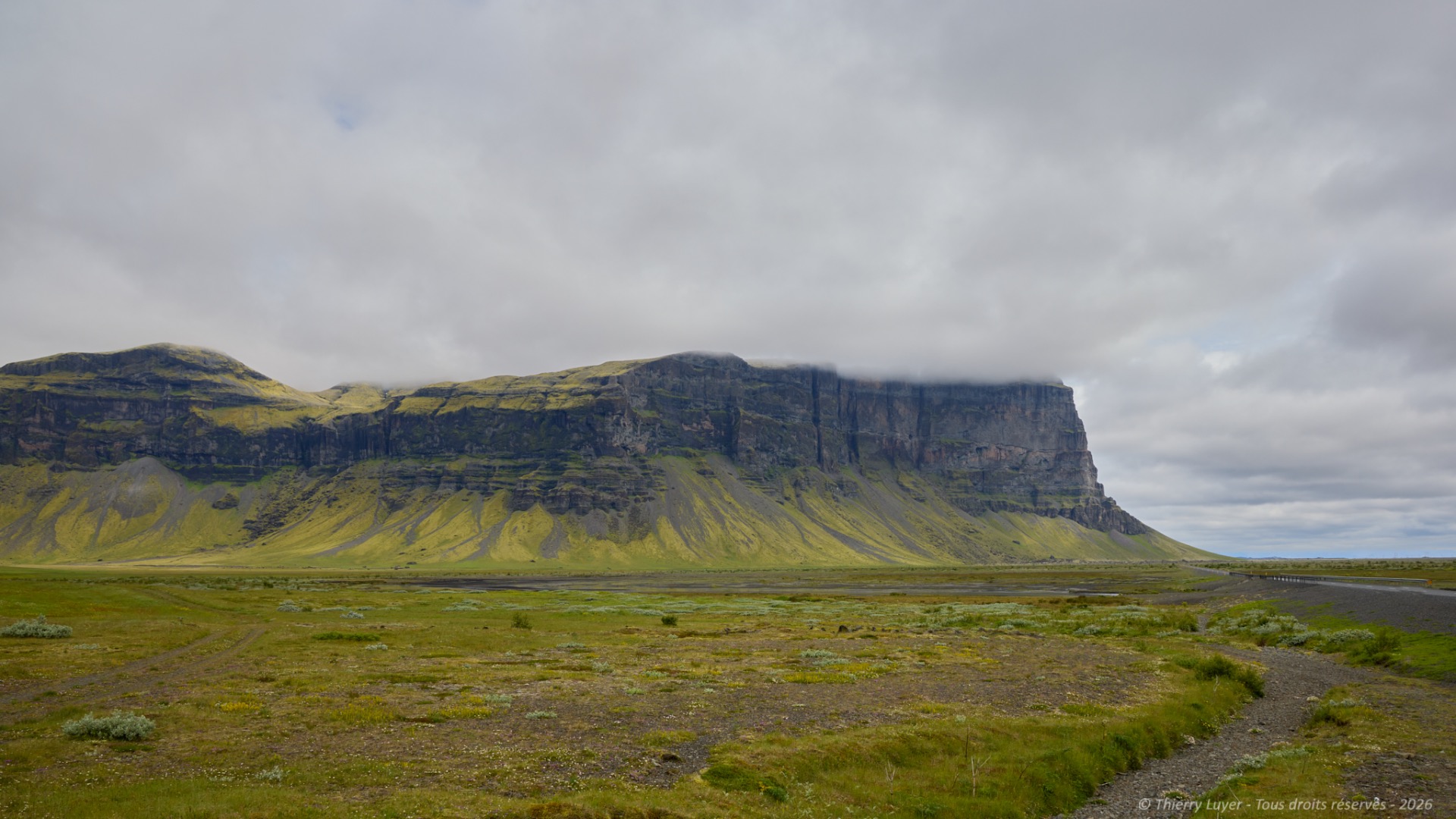
I get back on the road and the landscape changes... I feel like I am in the great American national parks with this mountain that goes by the name of Lómagnúpur mountain, which reminds me of those in the Grand Canyon.
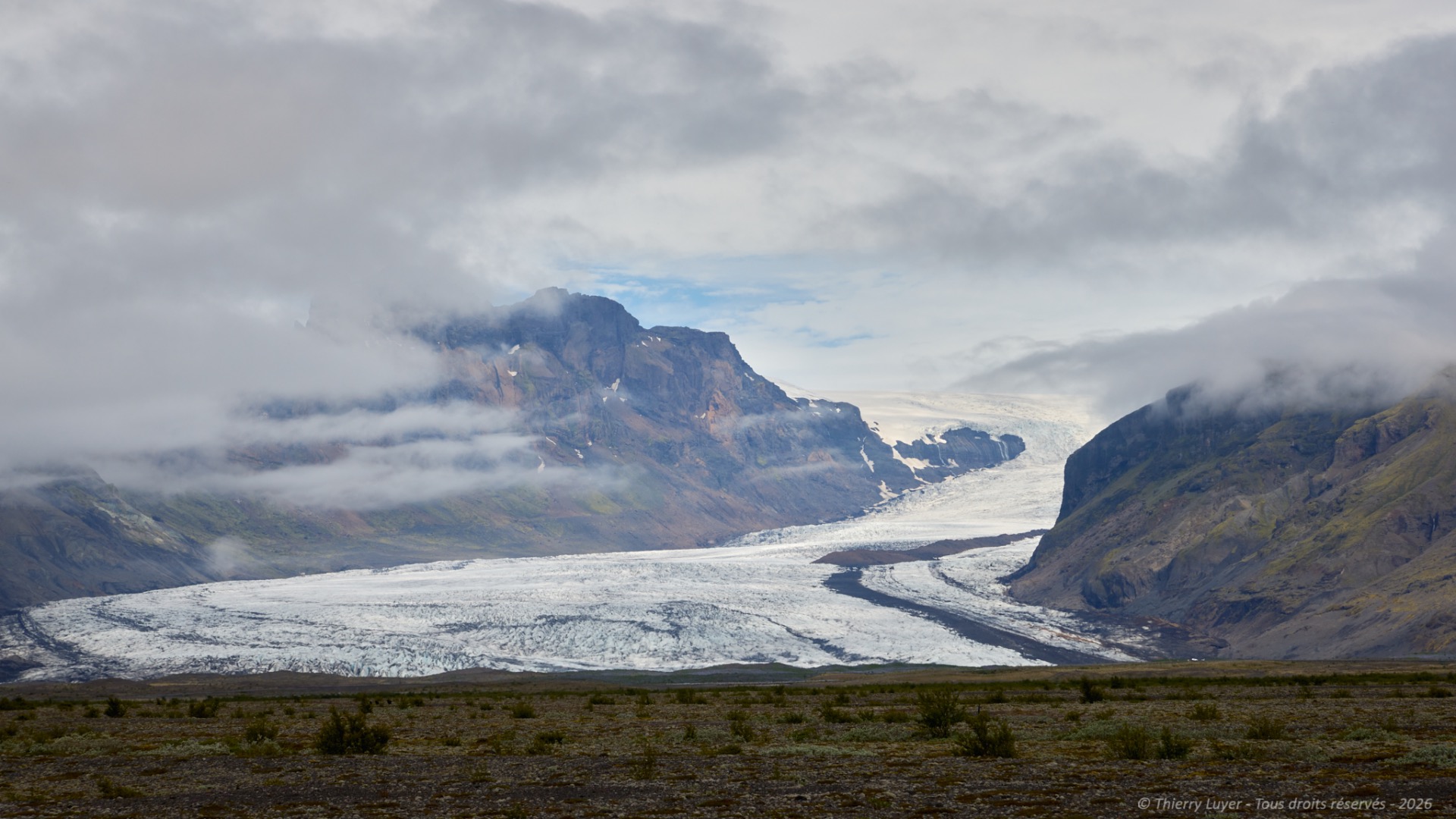
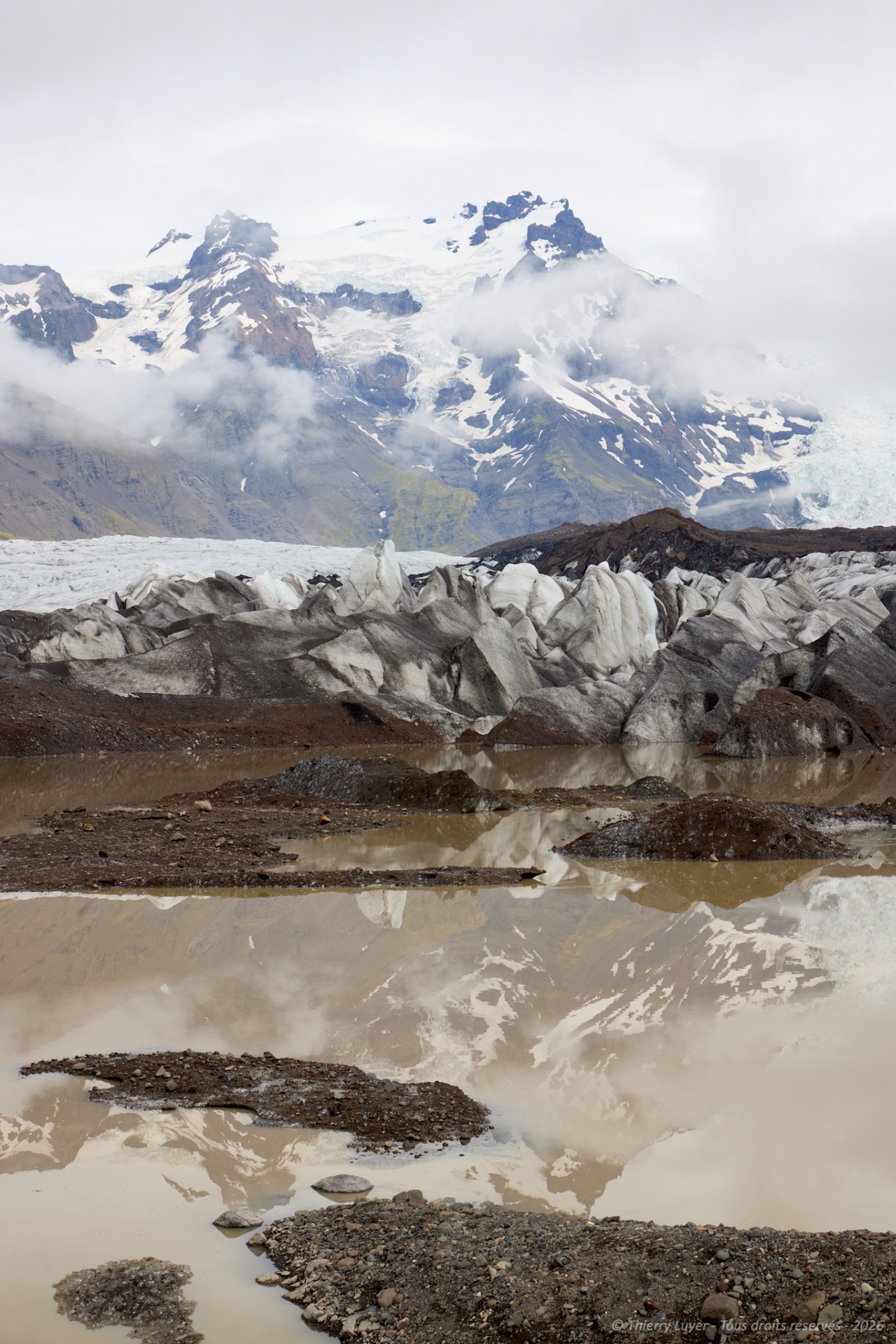
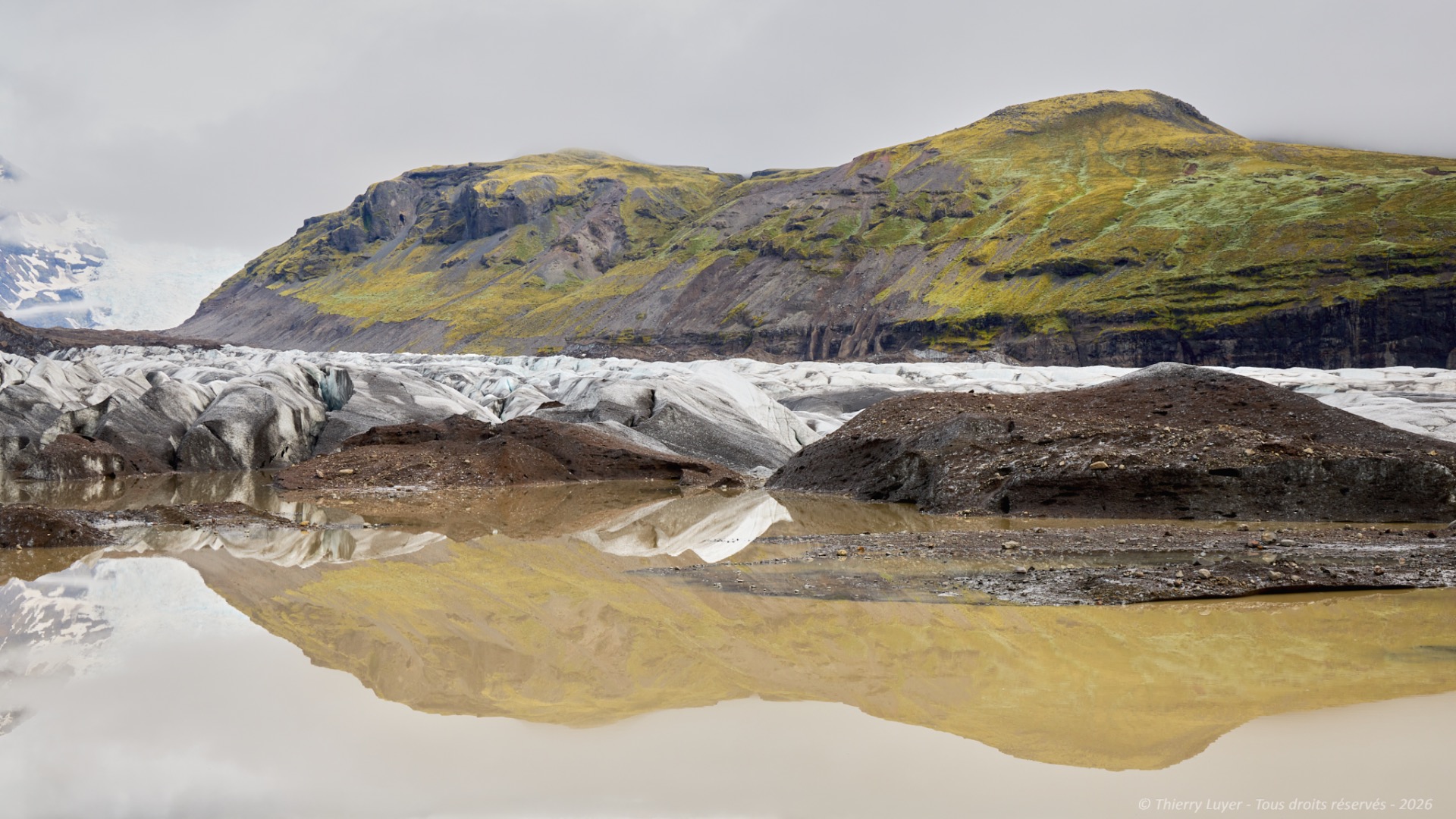
Still heading east, I now cross an immense lava plain, overlooking the sea, named Skaftafellsfjara, with the mountains of Skaftafell National Park and its glacier, Skaftafellsjökull, in my sights.
The color contrasts between the lava plain, the glacier tongue, and the snow-capped mountains are magnificent, for a brief moment.
After crossing this long plain, I take a stretch of dirt track to reach the Skaftafellsjökull gönguleið, a hiking trail leading to the foot of the glacier tongue.
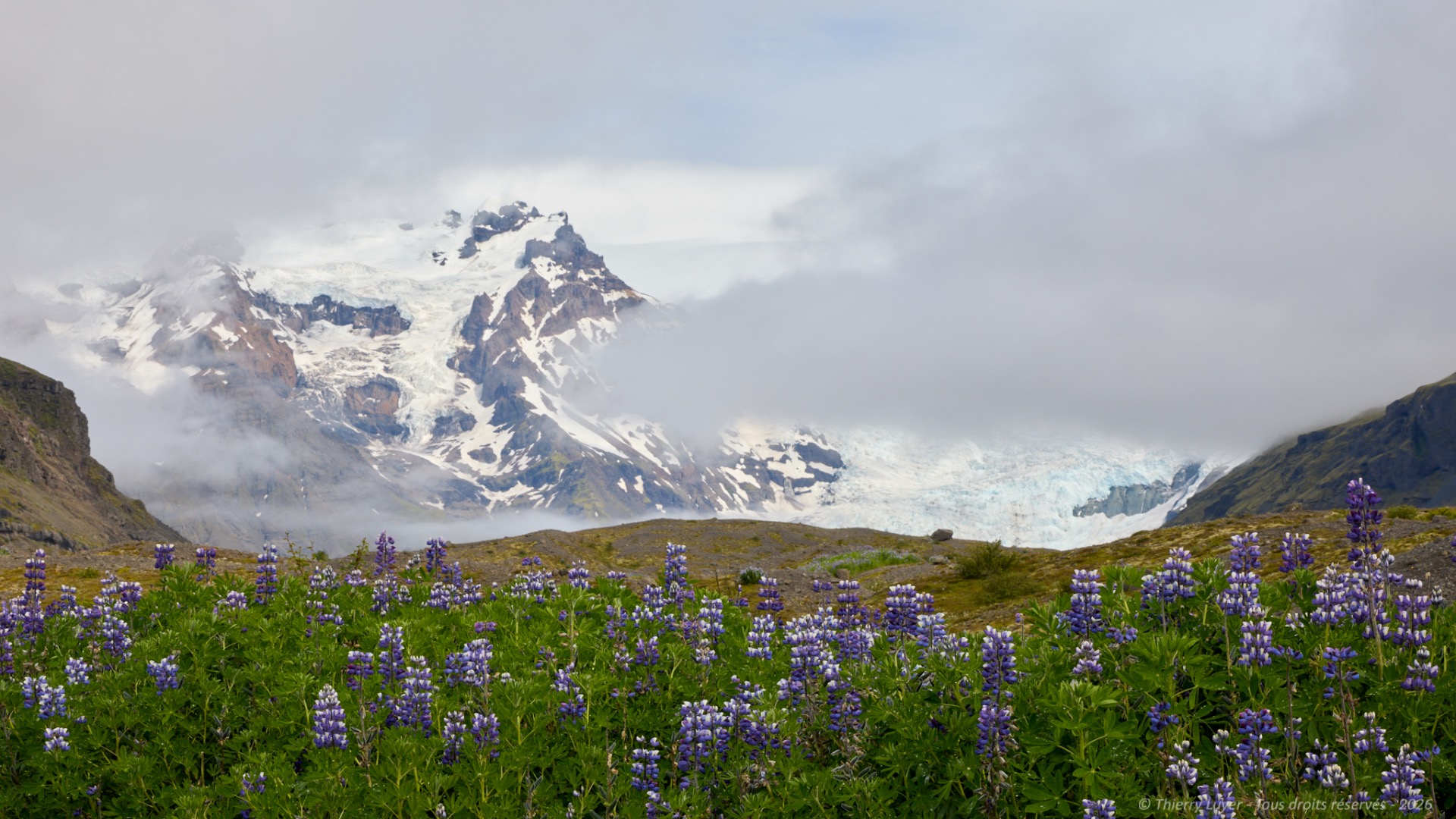
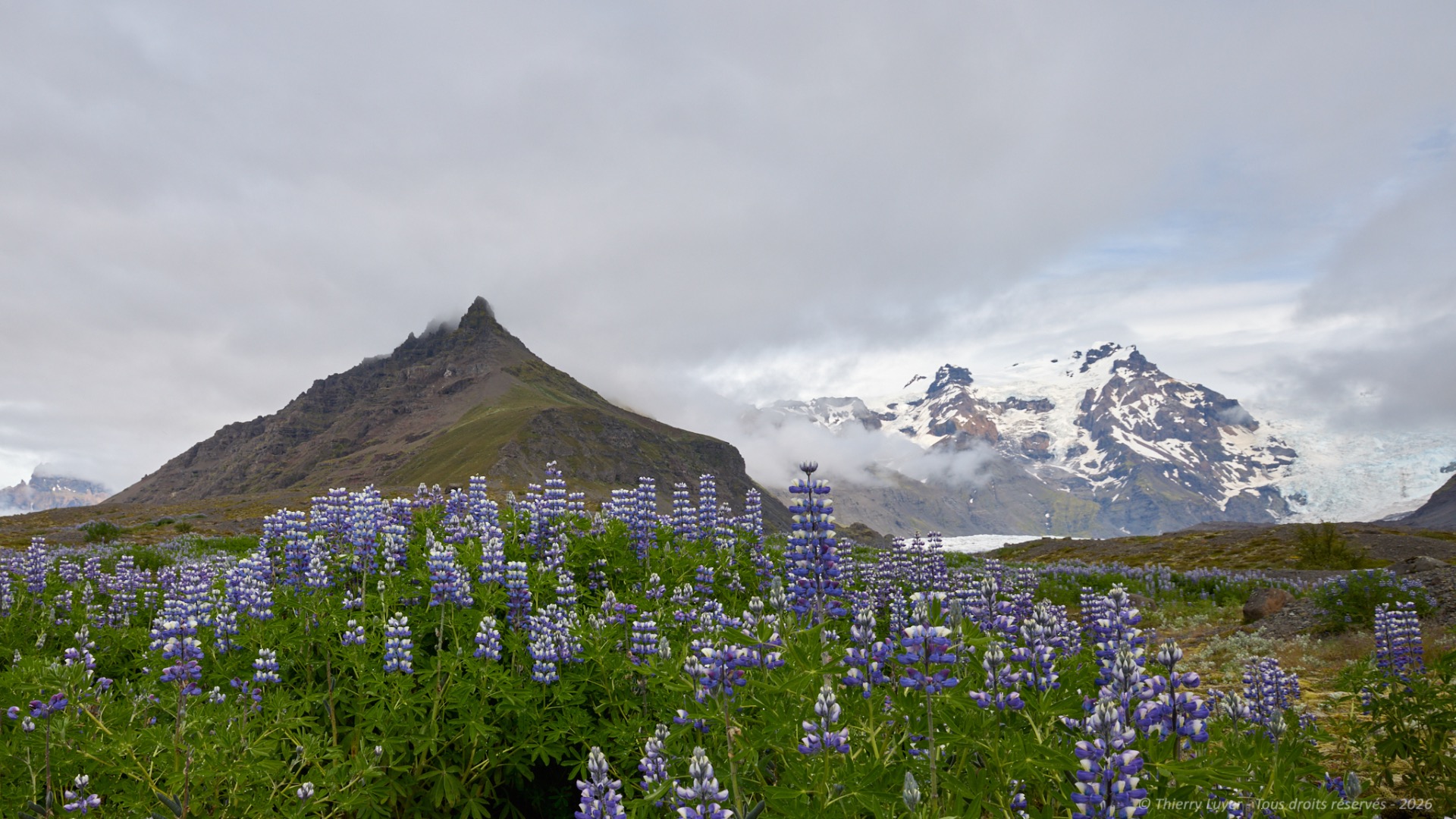
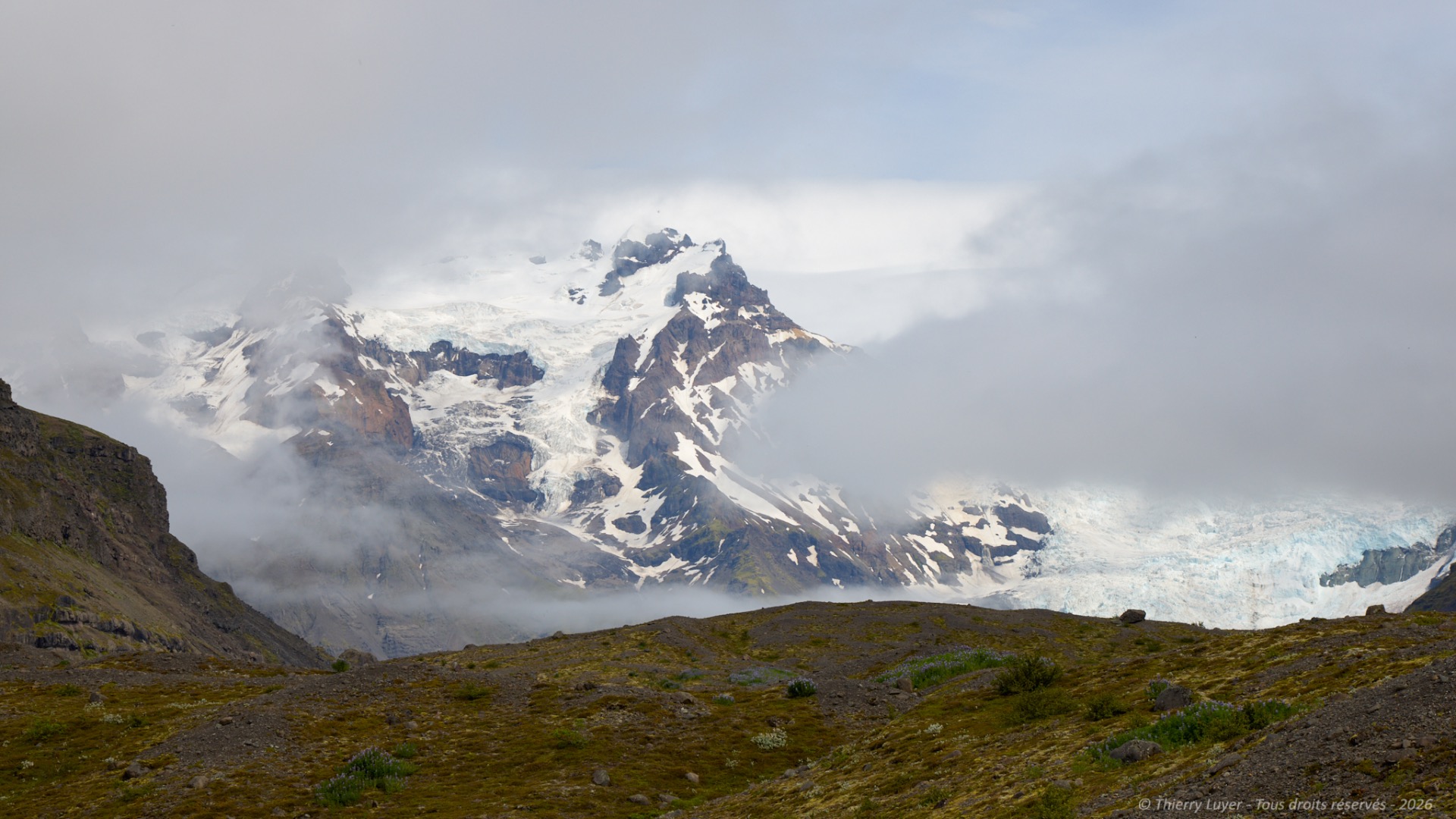
I get as close as possible to the glacier, whose ice cliffs are 20 to 30 meters high.
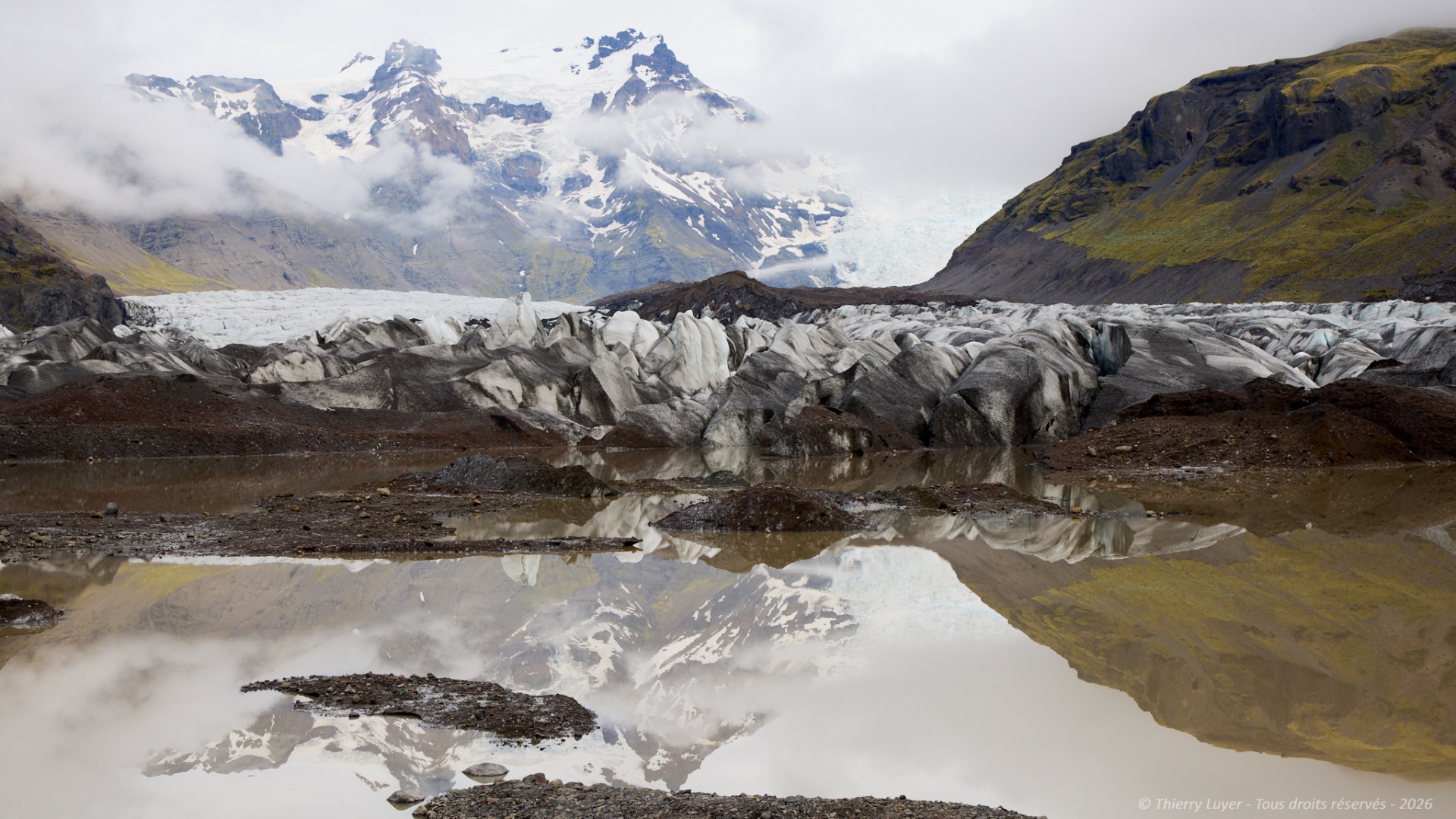

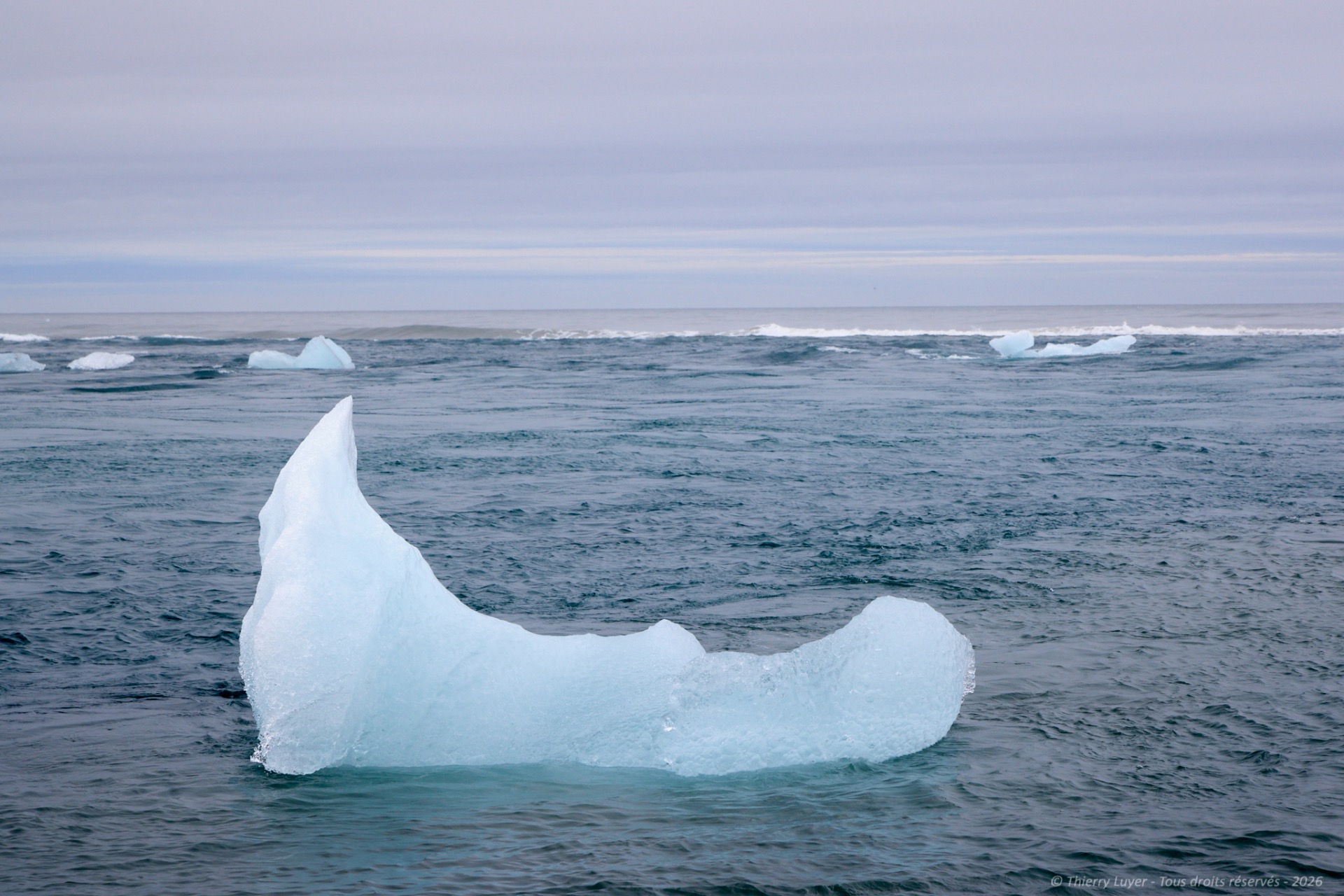
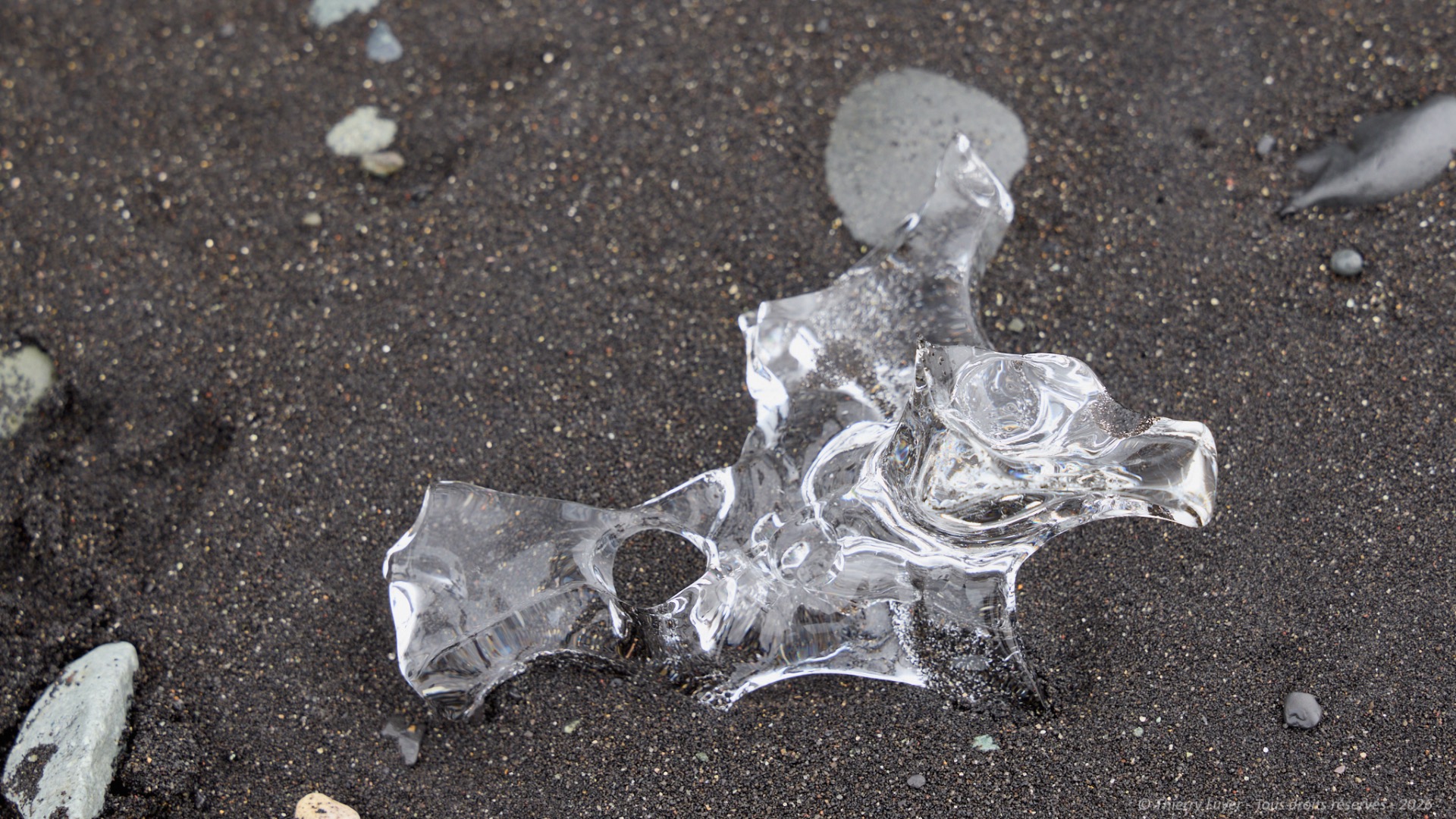
These icebergs gradually melt and, for lagoons open to the ocean, wash out to sea and end up on a beach nicknamed Diamond Beach due to the many blocks of ice washed ashore on the black sand. The ice is so pure that you can observe rainbow phenomena within it. (See photo below)
A full day that comes to an end after 160 km of driving.